
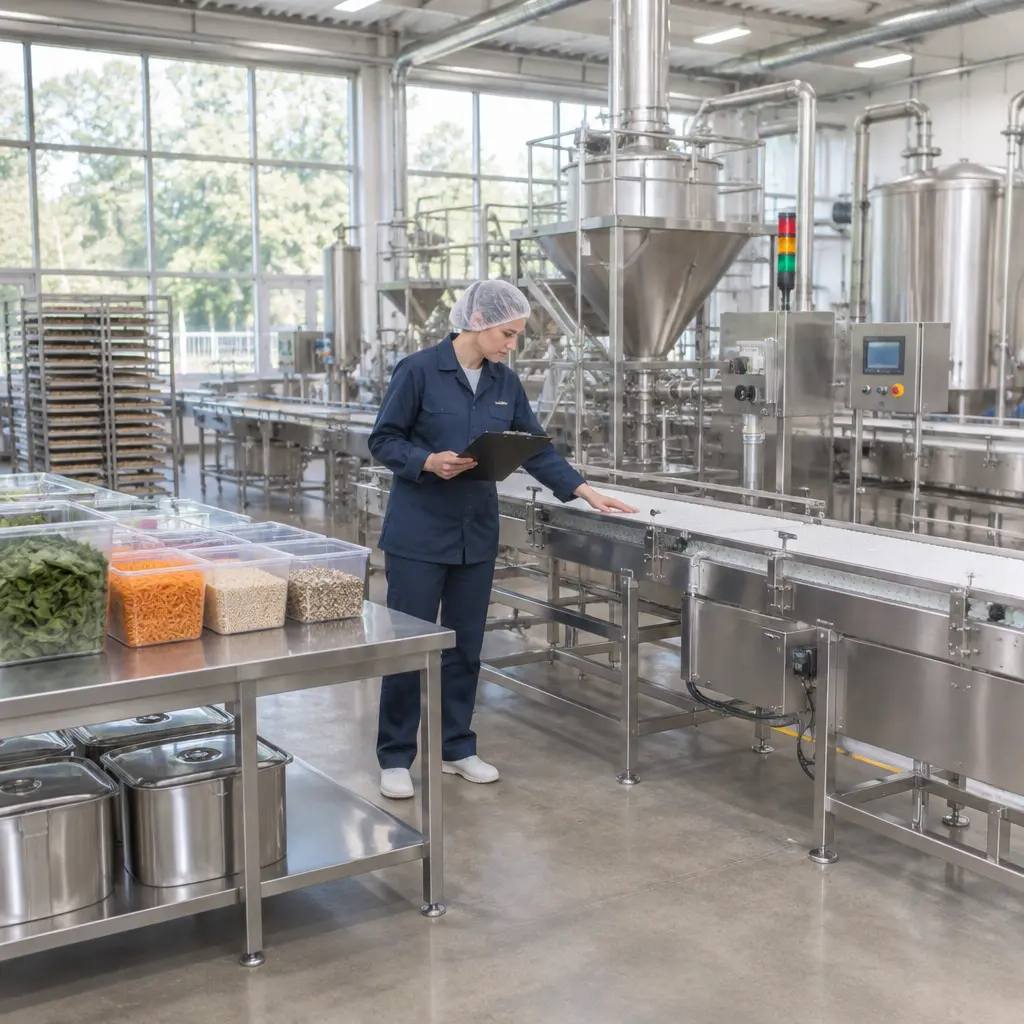
Organic processing integrity is the system of documented controls that protects organic products from prohibited substances, substitution, and contact with nonorganic materials throughout processing. In shared facilities, the practical safeguards are validated line clearance, physical or time-based separation, controlled rework, cleaning verification, traceability, and corrective action. These measures matter because the U.S. Department of Agriculture’s National Organic Program (USDA NOP) requires certified operations to prevent commingling and contact with prohibited substances, while organic certification depends on records and procedures—not merely a product’s final test result. This article explains the regulatory meaning of commingling, how shared-line controls work, how facilities validate them, and how real-world organic standards guide implementation.
Organic Processing Integrity: Commingling Controls in Shared Facility Lines
Definition and regulatory basis
Organic processing integrity means maintaining and demonstrating an organic product’s compliance from receipt of ingredients through processing, packaging, storage, and shipment. Under USDA NOP regulations, “commingling” is the mixing of organic and nonorganic products during production, processing, transportation, or storage. The rules also prohibit organic products from contacting prohibited substances. These are related but distinct risks: commingling concerns product identity and mixing, while contact can occur through residues on equipment, utensils, surfaces, or shared infrastructure.
The USDA’s organic handling requirements, particularly 7 CFR § 205.272, require handlers to implement measures that prevent commingling and contact with prohibited substances. Certified operations must describe their practices in an organic system plan (OSP), keep records that demonstrate compliance, and permit inspection by an accredited certifying agent. The rule does not prescribe one universal cleaning method or separation distance for every facility; the operation must identify relevant hazards and establish controls appropriate to its products and process.
Why shared lines create risk
A shared line can process organic and conventional products using the same conveyors, tanks, mixers, fillers, packaging equipment, or storage areas. Risk may arise from residual ingredients in equipment dead spots, incomplete changeovers, mislabeled containers, incorrect valve settings, carryover in rework, or a packaging run that begins before the line is cleared. Powder, liquid, allergen, and high-fat products can require different cleaning and inspection approaches because residues behave differently.
The scale of the sector makes reliable controls consequential. USDA’s National Agricultural Statistics Service reported that U.S. certified organic sales reached about $9.9 billion in 2021, up 13% from 2019. That figure describes certified organic farm sales, not the entire retail organic market, but it illustrates the economic importance of preserving organic identity through supply chains and processing operations.
Preventing Commingling: Shared-Line Controls and Their Attributes
Physical separation and dedicated equipment
Physical separation keeps organic materials apart from nonorganic materials through dedicated rooms, equipment, enclosed transfer systems, clearly designated storage, or barriers. Dedicated equipment can reduce changeover risk, but it is not the only compliant approach. A facility using shared machinery can instead rely on documented scheduling, effective cleaning, line clearance, and identity-preserving handling, provided the controls are appropriate and verifiable.
Useful physical controls include marked organic staging zones, sealed and identified ingredient containers, segregated utensils, protected organic packaging, and access controls for bulk tanks or silos. Color coding can support identification, but it should not be the sole safeguard: labels, batch records, and verification checks are needed to address human error and changes in shift or product sequence.
Production sequencing and time separation
Time separation means scheduling organic production in a defined window, commonly after a nonorganic run has been completed and the equipment cleaned and inspected. Some facilities schedule organic products first after a verified cleaning, while others run them after conventional products. The appropriate sequence depends on residue characteristics, process design, and the facility’s validated procedures; the schedule itself does not replace cleaning or line clearance.
A robust changeover procedure identifies the previous and next products, the equipment and product-contact surfaces included, the cleaning method, required inspection points, and the person who releases the line. It should also address downtime, interrupted runs, maintenance, and shift handoffs. A supervisor’s documented release before organic production helps show that the planned control was actually performed.
Cleaning, verification, and validation
Cleaning removes product residues and, where applicable, residues of substances that are not permitted in organic production. Verification checks whether a defined cleaning step was completed—for example, by reviewing records and visually inspecting accessible product-contact surfaces. Validation is the stronger, evidence-based demonstration that a procedure can consistently achieve its intended outcome under specified conditions. The terms are not interchangeable: a signed cleaning log verifies completion, but does not by itself prove that the method is effective for every product and piece of equipment.
Facilities can validate procedures using product-specific residue assessments, inspection of hard-to-clean areas, equipment-specific trials, and appropriate analytical testing where it adds value. Testing is a supporting tool, not a substitute for preventive controls or required records. A negative result only reflects the sample and method used; it cannot establish that every batch or surface is free of all possible residues.
The Codex Alimentarius Commission’s organic production guidelines similarly emphasize preventing contamination and maintaining separation during handling. For U.S. certification, the applicable USDA regulation and the operation’s certifier-reviewed organic system plan govern; Codex is a useful international reference, not a replacement for U.S. requirements.
Rework, storage, and packaging identity
Rework is material returned to a process or incorporated into a later batch. It can become a direct commingling pathway if organic and nonorganic rework are not separately identified, controlled, and reconciled. Procedures should specify permitted rework sources, container labels, quantities, storage conditions, approvals, and how the material’s organic status is maintained. If identity cannot be demonstrated, the material should not be represented as organic.
Packaging and finished-goods controls are equally important. Organic and nonorganic packaging should be distinguishable, obsolete labels should be removed during changeover, and packaging reconciliation should account for issued, used, damaged, and returned labels. Finished lots should remain traceable to ingredient lots and production records. These controls reduce the risk that a correctly processed product is misidentified—or that a conventional product is sold as organic.
Organic System Plans: Documentation, Traceability, and Corrective Action
The organic system plan as a control map
An organic system plan is the operation’s written description of practices and procedures used to comply with organic requirements. For shared-line processing, it should map product flows and identify where organic and nonorganic materials meet or could contact shared equipment. The plan should connect each identified risk to a control, a responsible role, a record, and a response if the control fails.
A practical plan can include line diagrams, approved ingredient and processing-aid lists, cleaning procedures, production-sequencing rules, rework instructions, labeling checks, training requirements, and a process for notifying the certifier of relevant changes. USDA rules require the plan to be updated when applicable practices change, so adding a product, equipment, or processing step should trigger a review rather than an informal work-around.
Records and lot-level traceability
Traceability links incoming ingredients and production events to finished lots and shipments. Records commonly include receiving documents, supplier organic certificates or verification, batch sheets, cleaning and line-clearance logs, packaging records, inventory movements, and shipping documents. The USDA organic regulations require operations to maintain records that disclose the activities and transactions of the operation in sufficient detail to be readily understood and audited.
A useful internal performance measure is the time needed to trace a finished lot backward to its inputs and forward to customers. Facilities can also monitor changeover deviations, label discrepancies, unaccounted product, cleaning failures, and corrective-action closure time. These are operational indicators rather than universal USDA-mandated thresholds; a facility should set targets suited to its process and verify them through periodic review.
Noncompliance response and product disposition
When a control fails or commingling is suspected, the operation should stop or contain the affected product, identify the relevant time window and lots, preserve records, and assess whether organic status can still be substantiated. Depending on the findings, product may need to be reprocessed under an approved procedure, downgraded from organic status, or otherwise handled according to applicable requirements and certifier direction. The facility should investigate the cause, correct the immediate issue, and prevent recurrence through revised procedures, maintenance, retraining, or stronger verification.
Prompt communication with the certifying agent is important when a situation may affect compliance or certification. A documented investigation should distinguish confirmed facts from assumptions and record the disposition of all affected materials. This approach protects consumers and buyers while avoiding unsupported claims that a product remains organic after its identity or handling history has become uncertain.
Implementation Example: A Shared Dry-Ingredient Line
Applying layered controls
Consider a facility that uses a shared blender and packaging line for conventional and organic flour blends. The operation can identify ingredient receiving and storage as upstream control points, schedule organic production in a defined window, remove prior product from the blender and conveyor, clean according to a procedure suited to dry residues, inspect hard-to-reach points, and document release before loading organic ingredients. It can then reconcile organic ingredient quantities with finished product, rework, samples, and recorded losses.
If a packaging label discrepancy occurs, the line should be stopped and affected units segregated until the facility can determine which products were packed under which label. If cleaning records are incomplete, the missing documentation should not be reconstructed from memory as though it were contemporaneous evidence. The operation should evaluate product status with its certifier, document the corrective action, and review whether supervision or record design needs improvement.
The example illustrates a general principle: no single safeguard is sufficient in every situation. Physical separation limits opportunities for error; sequencing and cleaning address shared equipment; records establish what occurred; and traceability supports a defensible response when something goes wrong.
Conclusion: Protecting Organic Identity Across Shared Lines
Organic processing integrity depends on preventing both commingling and contact with prohibited substances. In shared facilities, that means combining appropriate separation, controlled scheduling, effective cleaning, verification, rework and label controls, traceability, and corrective action within a certifier-reviewed organic system plan. USDA regulations establish the compliance framework, while operational data and validation help a facility show that its procedures work in practice.
Processors should map shared-line risks, review changeovers and product flows with their certifying agent, train employees on documented procedures, and periodically test whether records and controls stand up to an audit or trace exercise. Further reading should begin with USDA NOP regulations and guidance, followed by the facility’s certification requirements and relevant Codex guidance for broader international context.
Sources: Electronic Code of Federal Regulations, 7 CFR § 205.2, Terms Defined, https://www.ecfr.gov/current/title-7/subtitle-B/chapter-I/subchapter-M/part-205/section-205.2; Electronic Code of Federal Regulations, 7 CFR § 205.103, Recordkeeping by certified operations, https://www.ecfr.gov/current/title-7/subtitle-B/chapter-I/subchapter-M/part-205/section-205.103; Electronic Code of Federal Regulations, 7 CFR § 205.201, Organic production and handling system plan, https://www.ecfr.gov/current/title-7/subtitle-B/chapter-I/subchapter-M/part-205/section-205.201; Electronic Code of Federal Regulations, 7 CFR § 205.272, Commingling and contact with prohibited substance prevention practice standard, https://www.ecfr.gov/current/title-7/subtitle-B/chapter-I/subchapter-M/part-205/section-205.272; USDA National Agricultural Statistics Service, 2021 Organic Survey, https://www.nass.usda.gov/Publications/AgCensus/2022/Online_Resources/Organics/; Codex Alimentarius Commission, Guidelines for the Production, Processing, Labelling and Marketing of Organically Produced Foods, https://www.fao.org/fao-who-codexalimentarius/codex-texts/guidelines/en/


