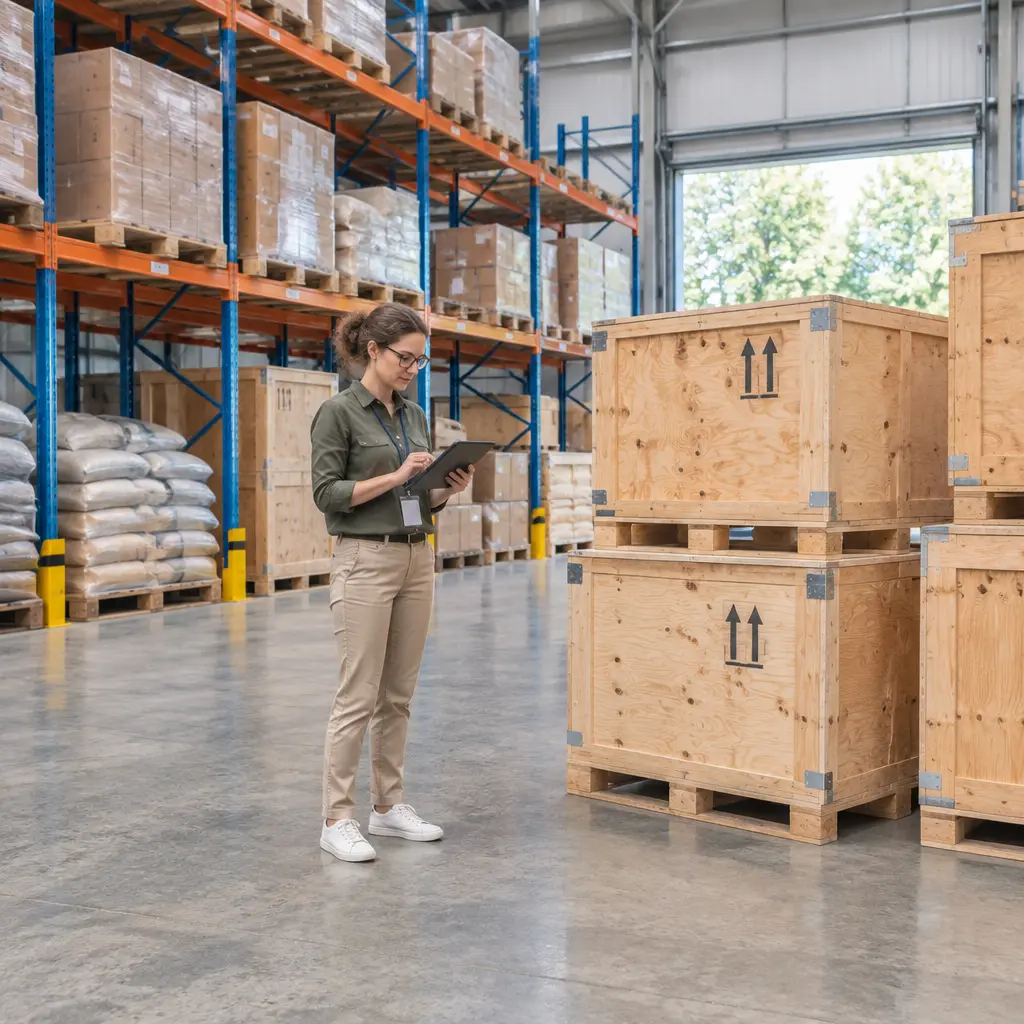
Biodegradable packaging is packaging designed to break down through biological activity under specified conditions, while a moisture barrier is a material feature that slows water vapor or liquid from reaching a product. Sustainable packaging innovation must balance both: a package needs to protect food or goods throughout storage and transport, yet have a realistic end-of-life route that reduces persistent waste. The challenge is significant: the OECD reported that the world generated 353 million tonnes of plastic waste in 2019, and only 9% was ultimately recycled. This article explains how barrier performance is measured, compares biodegradable material options and coating strategies, examines real-world constraints, and offers design steps for matching packaging to product and disposal systems.
Moisture-barrier performance defines the packaging challenge
Moisture-barrier performance is a package’s ability to limit the movement of water vapor or liquid water through its walls, seals, and closures. ASTM International and packaging researchers commonly assess vapor transmission using the water vapor transmission rate (WVTR): the amount of water vapor passing through a defined area over a specified time under stated temperature and humidity conditions. A lower WVTR generally means a stronger vapor barrier, but the required value depends on the product, package size, shelf life, and distribution environment.
The relevant material property is not the whole story. Thickness, humidity, temperature, pinholes, folds, seals, and package geometry can all affect actual protection. A barrier that performs well in a laboratory at one relative humidity may perform differently in a humid warehouse or after a pouch has been flexed. This is why specifications should report test conditions and why whole-package testing matters alongside film testing.
Water vapor transmission rate and product needs
WVTR measures water vapor permeation; it does not by itself predict every form of moisture damage. Dry snacks may lose crispness when they absorb water, while fresh produce may need packaging that manages water vapor and condensation rather than blocking all exchange. Powders, pharmaceuticals, and moisture-sensitive electronics can require particularly tight protection. Product-specific shelf-life studies should therefore connect WVTR targets to measurable quality outcomes, such as texture, weight change, microbial stability, or active-ingredient potency.
Food protection and packaging life-cycle trade-offs
Moisture protection can reduce spoilage, but adding material or combining incompatible layers can complicate recovery after use. The United Nations Environment Programme notes that food loss and waste contribute roughly 8–10% of global greenhouse-gas emissions. Packaging decisions should consequently compare the environmental burden of the package with the food or product it protects, rather than treating minimum package weight as the only measure of sustainability.
Biodegradability depends on material and disposal conditions
Biodegradability is the capacity of a material to be transformed by microorganisms into simpler substances under particular environmental conditions. It is not a universal promise that an item will disappear quickly in a garden, landfill, ocean, or home compost bin. The European Environment Agency emphasizes that biodegradation depends on factors including temperature, oxygen, moisture, microorganisms, and time. The term should therefore be tied to a specific environment and test standard.
Related terms describe different claims. “Bio-based” refers to feedstock origin, not necessarily end-of-life behavior; bio-based plastic can be non-biodegradable. “Compostable” means a product meets defined requirements for disintegration and biodegradation in a specified composting setting. “Biodegradable” alone does not establish that a package is recyclable, compostable, or harmless if littered.
Industrial and home compostability
Industrial compostability is evaluated under controlled conditions that typically provide managed heat, moisture, and aeration. Home composting is less controlled and often cooler, so a material certified for industrial composting may not break down reliably in a backyard pile. Standards such as ASTM D6400 and EN 13432 set criteria for compostable plastics and packaging in industrial composting contexts; certification and local facility acceptance should be checked before using a compostability claim.
Biodegradation is not a litter-management strategy
A biodegradable claim does not mean a package can safely be discarded outdoors. Natural environments vary greatly, and degradation may be slow or incomplete where conditions do not match the material’s test environment. The European Environment Agency cautions that biodegradable plastics can create confusion about littering and may not solve marine pollution. Clear disposal instructions and access to the intended collection system are therefore part of responsible packaging design.
Material and coating choices shape barrier performance
No single biodegradable material provides the ideal combination of moisture protection, mechanical strength, processability, cost, and end-of-life compatibility for every application. Material selection is a system decision: designers must consider the product, converting equipment, inks and adhesives, package format, and the waste infrastructure available to customers.
Cellulose, paper, and fiber-based structures
Paper and molded fiber are renewable, familiar packaging substrates, but untreated fibers readily absorb moisture and usually provide limited water-vapor resistance. Surface treatments, sizing agents, and coatings can improve performance. The trade-off is that some barrier layers can hinder repulping or composting, while moisture can also weaken fiber structures. A fiber package should be tested both for its required shelf-life performance and for compatibility with the collection route it claims to support.
PLA and other biodegradable polyesters
Polylactic acid (PLA) is a bio-based polyester commonly made from fermented plant sugars. It can provide useful clarity and stiffness, but its properties and degradation behavior depend on formulation and processing; many PLA items require industrial composting conditions and are not suitable for ordinary home composting. Other biodegradable polyesters, including PBAT blends, can improve flexibility or processing performance, but their bio-based content and disposal requirements vary. Neither material should be assumed to offer a sufficient moisture barrier without testing the specific film or structure.
Edible and bio-derived coatings
Polysaccharides, proteins, lipids, and waxes can be used as coatings to modify surface wetting, oxygen transfer, or moisture movement. Hydrophilic coatings may perform well as oxygen barriers when dry but can lose effectiveness as humidity rises; hydrophobic components can improve resistance to liquid water. These systems are promising for selected foods and applications, but performance, food-contact compliance, sensory effects, coating uniformity, and commercial-scale application all require validation.
Multilayer barriers offer protection but complicate recovery
Multilayer packaging combines materials to deliver properties that a single material may not provide, such as moisture resistance, oxygen protection, sealability, and puncture strength. Conventional plastic laminates can be difficult to recycle when their layers cannot be economically separated. Bio-based or biodegradable layers do not automatically resolve this issue: a composite can still be incompatible with recycling or composting streams if its components, adhesives, or thickness interfere with processing.
Thin coatings and compatibilized structures
One strategy is to apply a very thin barrier coating to a fiber or polymer substrate, reducing the amount of barrier material compared with a thick laminate. Another is to engineer a structure whose layers can be processed together in a defined recycling or composting stream. These approaches should be assessed through package-level barrier tests, seal integrity checks, and end-of-life trials—not inferred from the properties of each component in isolation.
Design for the actual collection route
The Ellen MacArthur Foundation’s New Plastics Economy work has emphasized designing packaging for reuse, recycling, or composting pathways rather than relying on material labels alone. In practice, a compostable package is useful only where organics collection and suitable processing exist, while a recyclable package needs to fit local sorting and reprocessing capabilities. Clear labeling should tell users what to do and should not imply that a package is accepted everywhere.
Testing and life-cycle assessment validate packaging claims
A credible design process tests both function and environmental performance. Laboratory measurements establish barrier behavior under controlled conditions; shelf-life and distribution tests examine whether the product survives real handling; life-cycle assessment (LCA) compares impacts across a defined system boundary. ISO 14040 and ISO 14044 describe principles and requirements for LCA, including goal definition, inventory analysis, impact assessment, and interpretation.
A practical validation sequence
- Define the product’s moisture sensitivity, target shelf life, and distribution conditions.
- Set measurable WVTR and package-integrity requirements, specifying test temperature and relative humidity.
- Test the finished package, including seals, closures, flexing, and realistic storage conditions.
- Check food-contact, compostability, recyclability, or other claims against applicable standards and local infrastructure.
- Use an LCA or equivalent comparative assessment to include material production, product loss, transport, and end-of-life outcomes.
Interpreting environmental comparisons
LCA results are sensitive to assumptions such as electricity mix, transport distance, package mass, recycling rates, composting availability, and whether avoided food waste is included. A lighter package may reduce material use but increase spoilage; a compostable structure may have little benefit if it is sent to landfill or contaminates recycling. Comparisons should state their functional unit—for example, packaging needed to deliver a defined quantity of safe product—and disclose key assumptions.
Conclusion: balance protection, biodegradability, and infrastructure
Moisture-barrier performance determines whether packaging protects a product, while biodegradability describes behavior only under specific conditions. Cellulose, PLA, bio-derived coatings, and multilayer structures each offer useful options, but none removes the need for package-level testing and disposal-system compatibility. With plastic waste reaching 353 million tonnes globally in 2019 and food waste contributing substantial emissions, packaging innovation should protect products without creating unmanageable end-of-life burdens.
Brands, converters, and procurement teams should begin with product-specific WVTR targets, validate whole-package performance, and select materials according to verified local recovery pathways. Read the relevant ASTM, EN, and ISO standards, consult local composting and recycling operators, and require transparent evidence for environmental claims before scaling a new package.
Sources: OECD, Global Plastics Outlook: Economic Drivers, Environmental Impacts and Policy Options, 2022, https://www.oecd.org/environment/plastics/plastics-outlook/; United Nations Environment Programme, Food Waste Index Report 2021, https://www.unep.org/resources/report/unep-food-waste-index-report-2021; European Environment Agency, Biodegradable and Compostable Plastics—Challenges and Opportunities, 2020, https://www.eea.europa.eu/publications/biodegradable-and-compostable-plastics; ASTM International, ASTM D6400 Standard Specification for Labeling of Plastics Designed to be Aerobically Composted in Municipal or Industrial Facilities, https://www.astm.org/d6400-21.html; European Committee for Standardization, EN 13432: Packaging—Requirements for Packaging Recoverable Through Composting and Biodegradation, https://knowledge.bsigroup.com/products/packaging-requirements-for-packaging-recoverable-through-composting-and-biodegradation-test-scheme-and-evaluation-criteria-for-the-final-acceptance-of-packaging; International Organization for Standardization, ISO 14040: Environmental Management—Life Cycle Assessment—Principles and Framework, https://www.iso.org/standard/37456.html; International Organization for Standardization, ISO 14044: Environmental Management—Life Cycle Assessment—Requirements and Guidelines, https://www.iso.org/standard/38498.html; Ellen MacArthur Foundation, New Plastics Economy Global Commitment, https://www.ellenmacarthurfoundation.org/global-commitment/overview.