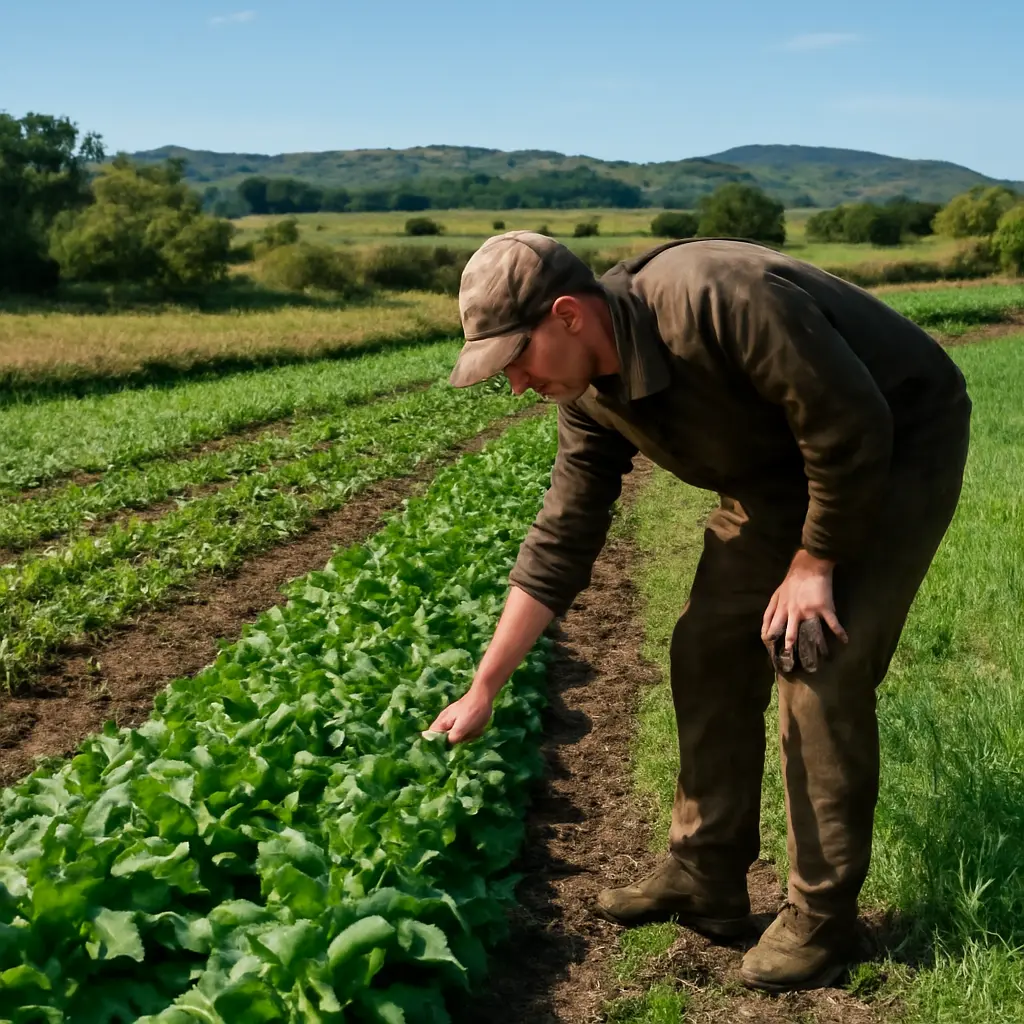
Organic certification remains a useful, regulated signal, but consumer trust in food increasingly depends on more than a seal. Trust signals beyond the certified organic seal include transparent sourcing, credible animal-welfare and fair-trade certifications, clear ingredient and production information, traceability, and a brand’s record of accountability. These signals matter in a market where U.S. sales of certified organic products reached $69.7 billion in 2023, according to the Organic Trade Association, while research by the International Food Information Council has found that consumers use multiple cues—including ingredients, nutrition information, and claims on packaging—to judge food. Understanding how these signals are defined, verified, and communicated helps shoppers distinguish evidence from marketing and helps businesses build trust without overstating what a label proves.
Food-label trust signals define consumer confidence beyond organic certification
A consumer trust signal is a piece of information or evidence that helps a buyer assess whether a food product, producer, or claim is credible. The term is broader than a certification: it can include independent audits, public standards, supply-chain records, ingredient disclosures, and a company’s responses when problems arise. The U.S. Department of Agriculture’s National Organic Program defines the requirements for products marketed as organic and provides for certification and enforcement; the organic seal therefore indicates compliance with a specific production standard, not a general guarantee of superior nutrition, environmental performance, or ethical conduct.
That distinction is important because labels often communicate different things. A certification may verify a defined practice, such as fair-trade sourcing or animal-welfare requirements. A disclosure may simply give consumers information, such as a country of origin or an ingredient list. A broad marketing phrase such as “natural” may have less precise or less consistent meaning. The strongest approach is to ask what a signal means, who verifies it, and what evidence supports it.
Third-party certification: a defined standard with outside verification
Third-party certification occurs when an organization independent of the seller assesses a product or production system against published criteria. Its value depends on the clarity of the standard, the competence and independence of the auditor, and the consequences for failing to comply. USDA organic certification is one example; other examples include certain fair-trade, seafood, and animal-welfare programs. Certifications are not interchangeable: each has a distinct scope, and consumers should check whether the mark applies to the product, a specific ingredient, a farm, or a company-wide policy.
Transparency: information consumers can inspect
Transparency means making relevant product and supply-chain information accessible enough for people to evaluate a claim. Ingredient lists, nutrition facts, origin statements, and explanations of sourcing policies can all contribute. The Food and Drug Administration requires standardized Nutrition Facts labeling on most packaged foods, giving consumers a common way to compare nutrients and serving sizes. Transparency is most useful when information is specific and comprehensible; a QR code or lengthy sustainability report is not, by itself, proof that a claim is accurate.
Traceability: following food through the supply chain
Traceability is the ability to track a food and its relevant records through production, processing, and distribution. It can support food-safety investigations, verify origin claims, and help companies identify affected products during a recall. The FDA’s Food Traceability Rule establishes additional recordkeeping requirements for foods on its Food Traceability List, with compliance required by January 20, 2026, subject to applicable regulatory provisions. Traceability does not automatically prove that a product is sustainable or ethically produced, but it can make those claims easier to check when records are available and independently assessed.
Independent certifications verify specific ethical and environmental attributes
Beyond organic certification, voluntary labels can address concerns that organic rules do not set out to cover in full. These include worker compensation, wildlife impacts, fishing methods, greenhouse-gas emissions, and the treatment of farm animals. Each label should be read as a claim about a defined set of criteria—not as a universal endorsement of a product. The International Organization for Standardization’s guidance on environmental labels emphasizes the importance of accurate, verifiable, and non-misleading claims, a principle that also helps consumers assess ethical and social claims.
Fair-trade labels: labor and trading conditions
Fair-trade programs generally seek to improve terms for producers and workers through requirements that may include minimum pricing, premiums for community or producer investment, labor protections, and environmental practices. The exact rules vary by program and commodity, so the logo alone does not tell shoppers which provisions apply. Fairtrade International’s reporting for 2023 stated that its producer organizations received €190 million in Fairtrade Premium payments, illustrating the scale of one program’s additional funding mechanism. That figure measures payments under the Fairtrade system; it should not be taken as proof that every labeled product delivers the same outcomes.
Animal-welfare certifications: housing and handling standards
Animal-welfare certifications assess specified conditions such as space, access to outdoor areas, handling, transport, or slaughter practices. Their requirements differ substantially, and terms such as “cage-free,” “free-range,” and “pasture-raised” should not be assumed to mean the same thing. The USDA’s Food Safety and Inspection Service evaluates certain animal-raising claims on meat and poultry labels through documentation review and, where appropriate, supporting evidence. Consumers can use a certification’s published standard to understand what is inspected and whether the claim covers the animal’s full life cycle or only particular stages.
Environmental and seafood labels: managing impacts on ecosystems
Environmental certifications can address practices such as forest protection, agricultural biodiversity, or responsible fisheries. For seafood, the Marine Stewardship Council’s standard evaluates wild-capture fisheries against criteria that include the health of fish stocks, ecosystem impacts, and effective management. The United Nations Food and Agriculture Organization reported that 62.3% of marine fishery stocks assessed in 2021 were fished within biologically sustainable levels, underscoring why credible, fishery-specific information matters. A sustainability mark is most informative when shoppers can identify the certified fishery or farm and consult the certification’s scope and assessment process.
Product information and company conduct strengthen or weaken trust
Certifications provide structured evidence, but consumer trust also depends on the everyday information and conduct surrounding a product. Clear disclosures can help people make choices aligned with dietary needs, values, or budget, while consistent and accountable behavior can show whether a company’s claims are credible over time. This is where ingredient and nutrition information, origin disclosures, recall practices, and responsible marketing connect: together, they give consumers a broader picture than any single mark can provide.
Ingredient and nutrition disclosure: concrete information at the point of choice
Ingredient and nutrition labels are standardized disclosures that allow consumers to compare packaged foods and identify components relevant to allergies, dietary preferences, or health goals. The FDA requires major food allergens to be identified under federal labeling law, and its updated Nutrition Facts rules require added sugars to be declared on most covered packaged foods. These disclosures are not endorsements of a product’s overall quality, but their consistent format makes them practical trust tools. A shopper can use them alongside, rather than instead of, certifications and sourcing information.
Origin and supply-chain disclosure: where food comes from
Origin disclosure identifies the geographic source of a food or ingredient. U.S. country-of-origin labeling rules cover specified commodities, including certain muscle cuts and ground meat, fish and shellfish, perishable agricultural commodities, peanuts, pecans, and macadamia nuts. Origin information can support consumer choice and help clarify supply chains, but it does not, by itself, establish that a product was produced sustainably or under fair labor conditions. Stronger claims pair origin details with verifiable standards and accessible records.
Recall readiness and accountability: trust tested when something goes wrong
A company’s response to a safety incident is a practical test of trustworthiness. Prompt public notice, accurate product identification, cooperation with regulators, and corrective action help limit harm and show whether a business can trace products through its supply chain. The FDA and USDA Food Safety and Inspection Service publish recall information for foods within their respective jurisdictions. Consumers can check these notices, while businesses can strengthen confidence by explaining how they investigate complaints and prevent repeat problems. A clean record is not a guarantee of safety; openness and effective response are meaningful signals when issues occur.
Green claims require evidence, boundaries, and careful interpretation
Environmental and ethical messaging can help shoppers understand a company’s goals, but broad, unqualified language may obscure what has actually been measured. Terms such as “eco-friendly,” “sustainable,” or “responsibly sourced” can refer to different impacts and different parts of a product’s life cycle. The Federal Trade Commission’s Green Guides advise marketers to qualify environmental claims with clear, specific information and to avoid claims that overstate a product’s benefits. For consumers, the practical question is whether a claim identifies the impact, the evidence, and the portion of the product or supply chain it covers.
Specific claims outperform vague promises
A specific claim can be evaluated: for example, a statement that a package contains a stated percentage of recycled material is more testable than a general assertion that the package is “green.” Likewise, a company can make a meaningful sourcing claim by identifying the commodity, geographic scope, standard, and verification method. The FTC guidance cautions against broad claims that imply a product has no environmental impact when that conclusion cannot be substantiated. Consumers should look for measurable descriptions and ask whether the supporting evidence is current and independently checked.
Comparability and certification limits
Labels are useful only when their criteria are understandable and comparable. Two certifications may differ in audit frequency, chain-of-custody controls, enforcement, and whether the standard covers a product’s entire life cycle. The Ecolabel Index, a global directory of environmental labels, has catalogued hundreds of ecolabels across countries and product categories, illustrating how crowded the claims landscape can be. That variety makes it important to consult the certifier’s own standard rather than infer meaning from a logo’s appearance or marketing language.
A practical method for evaluating food claims
Consumers can evaluate a trust signal by checking four points: what exactly is being claimed; who set the standard or supplied the information; how compliance is verified; and what the claim leaves out. For a certification, read the scope and audit rules. For a package statement, compare it with the ingredient list and required disclosures. For a company-wide promise, look for dated progress reports, measurable targets, and information about setbacks. This method does not require shoppers to investigate every product exhaustively; it helps them focus on claims that matter most to their decision.
Conclusion: use multiple trust signals, not a single seal
Consumer trust signals beyond the certified organic seal include independently verified certifications, transparent ingredient and origin information, traceability, specific environmental claims, and a company’s conduct during safety or sourcing problems. Organic certification remains valuable for the production requirements it verifies, but it does not answer every question about nutrition, labor, animal welfare, or environmental impact. Consumers can make more informed choices by checking the scope of a claim, the credibility of its evidence, and the organization responsible for verification. Businesses, in turn, should use precise language, publish accessible proof, and correct misleading claims. For further reading, consult USDA organic standards, FDA food-labeling and traceability resources, FTC Green Guides, and the published criteria of any certification appearing on a product.
Sources: Organic Trade Association, 2024 Organic Industry Survey, https://ota.com/news/press-releases/organic-industry-survey-2024; U.S. Department of Agriculture, National Organic Program, https://www.ams.usda.gov/about-ams/programs-offices/national-organic-program; International Food Information Council, 2024 IFIC Food and Health Survey, https://ific.org/research/2024-food-health-survey/; International Organization for Standardization, ISO 14020:2022 Environmental statements and programmes for products, https://www.iso.org/standard/79479.html; U.S. Food and Drug Administration, Food Traceability Rule, https://www.fda.gov/food/food-safety-modernization-act-fsma/food-traceability-rule; Fairtrade International, Annual Report 2023–2024, https://www.fairtrade.net/library/annual-report-2023-2024; U.S. Department of Agriculture, Food Safety and Inspection Service, Animal Raising Claims, https://www.fsis.usda.gov/inspection/compliance-guidance/labeling/animal-raising-claims; Marine Stewardship Council, Fisheries Standard, https://www.msc.org/standards-and-certification/fisheries-standard; Food and Agriculture Organization of the United Nations, The State of World Fisheries and Aquaculture 2024, https://www.fao.org/publications/home/fao-flagship-publications/the-state-of-world-fisheries-and-aquaculture/en; U.S. Food and Drug Administration, Food Allergies, https://www.fda.gov/food/food-labeling-nutrition/food-allergies; U.S. Department of Agriculture, Agricultural Marketing Service, Country of Origin Labeling, https://www.ams.usda.gov/rules-regulations/cool; U.S. Food and Drug Administration, Recalls, Market Withdrawals, & Safety Alerts, https://www.fda.gov/safety/recalls-market-withdrawals-safety-alerts; U.S. Department of Agriculture, Food Safety and Inspection Service, Recalls and Public Health Alerts, https://www.fsis.usda.gov/recalls; Federal Trade Commission, Guides for the Use of Environmental Marketing Claims, https://www.ftc.gov/legal-library/browse/rules/green-guides; Ecolabel Index, Directory of Ecolabels, https://www.ecolabelindex.com/