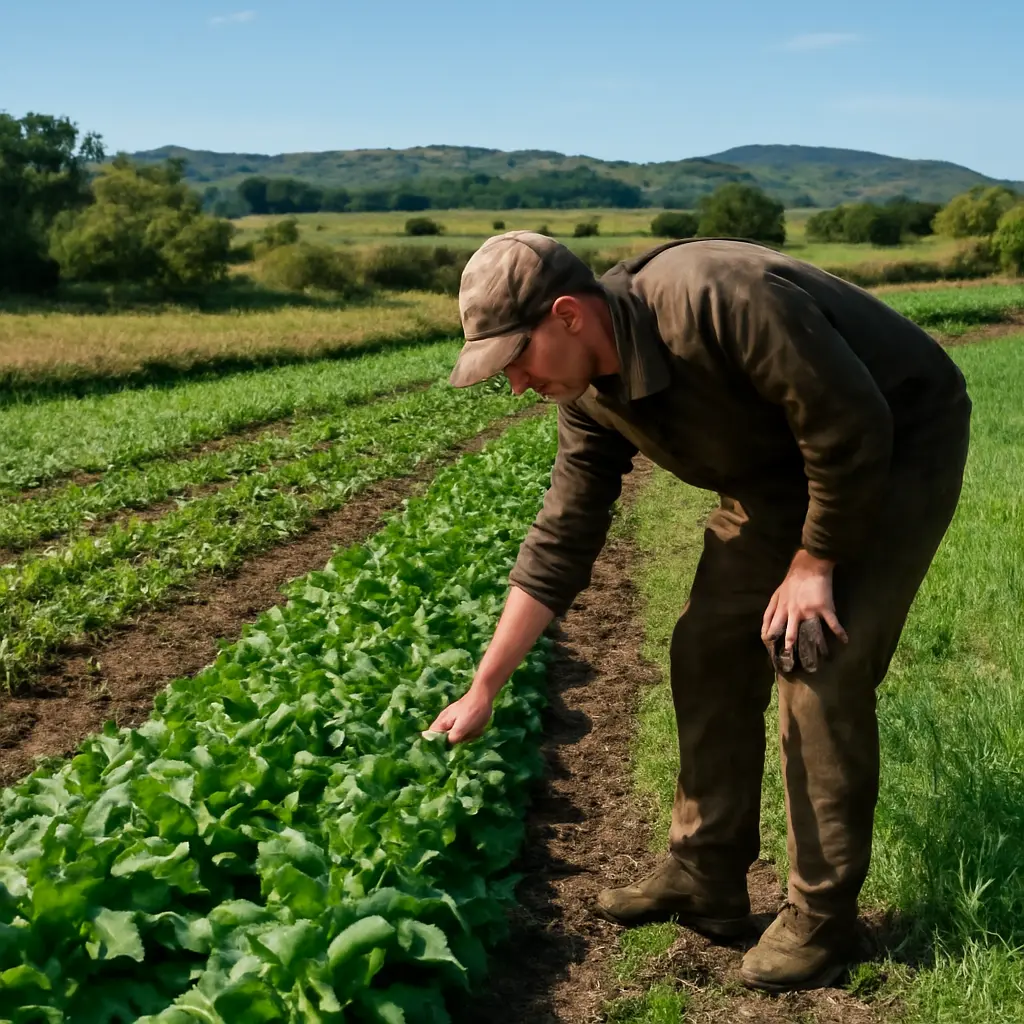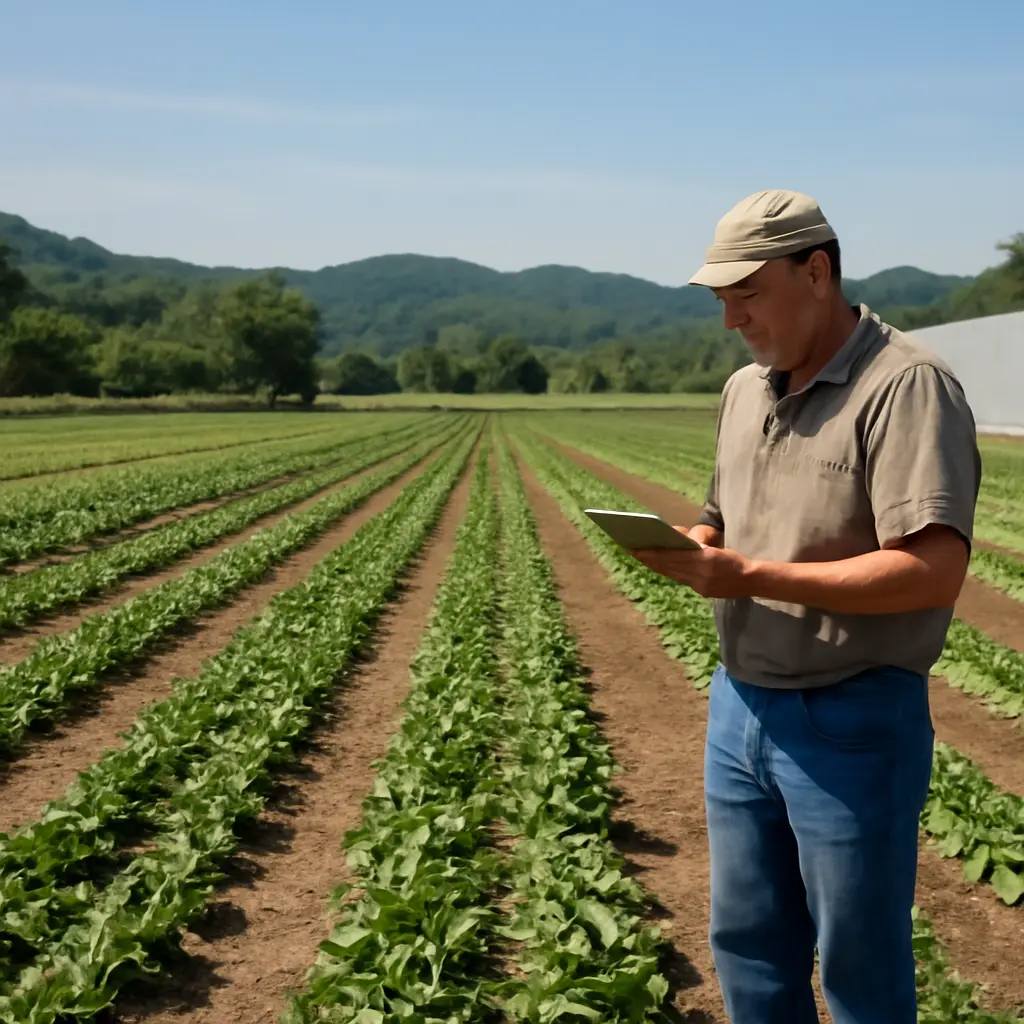
Organic food is food produced and handled under rules that restrict most synthetic pesticides and fertilizers, prohibit genetic engineering under many standards, and require inspection and records to verify compliance. Worldwide, “organic” is not governed by one universal law: governments and regional bodies set their own production, labeling, certification, and import requirements, while trade agreements allow some—but not all—systems to recognize one another. The International Federation of Organic Agriculture Movements (IFOAM – Organics International) reported that organic farmland reached about 96.4 million hectares in 2022, roughly 2% of agricultural land globally. Understanding how standards are written, farms and processors are certified, labels are controlled, and imports are checked helps consumers and businesses assess what an organic claim actually means.
Organic food regulation establishes standards for production and verification
Organic food regulation is the system of laws, standards, inspections, certification, and enforcement that determines when products may be marketed as organic. IFOAM – Organics International describes organic agriculture through principles of health, ecology, fairness, and care; legal rules translate those broad principles into specific requirements for inputs, land management, livestock, processing, and records. A product’s organic status therefore depends not merely on how it was grown, but on whether its full supply chain meets the applicable standard and is verified by an authorized control system.
The rules commonly cover crop production, animal husbandry, food processing, labeling, and trade. National systems differ in details such as permitted substances, conversion periods, group certification, and the treatment of mixed farms. Their common regulatory tools are certification, inspection, traceability, and penalties for misuse of the organic claim.
Production standards define permitted and prohibited practices
Organic production standards specify how land, crops, and livestock must be managed. They typically require soil-building practices, crop rotation, preventive pest management, and restrictions on synthetic fertilizers and pesticides. They also prohibit or tightly restrict genetically modified organisms under many major standards. Organic is not synonymous with “chemical-free”: some natural or approved substances may be used, and the precise permitted-input lists vary by jurisdiction.
Conversion periods help ensure that land has been managed according to the standard before its harvest can be sold as organic. In the United States, the National Organic Program generally requires land to have had no prohibited substances applied for three years before an organic crop harvest. EU rules also set conversion requirements, with periods depending on the crop and production circumstances. These transition rules connect farm practice to the certification and labeling claims that follow.
Certification and inspection verify compliance
Certification is formal confirmation by an authorized certification body that an operator complies with the applicable organic standard. Operators generally submit an organic system plan, maintain records of inputs and sales, and undergo inspections. Inspectors assess fields, facilities, storage, and documentation; risk-based or unannounced checks may supplement routine inspections. Traceability records are important because they allow auditors to follow products from farm through processing and sale.
In the United States, the Department of Agriculture’s National Organic Program (USDA NOP) accredits certifying agents and sets national rules. The USDA reported more than 45,000 certified organic operations worldwide under its program in 2023. In the European Union, operators are supervised by control authorities or control bodies, with annual inspections as a central part of the control system. Certification is not a one-time badge: continued compliance and renewal are required.
Organic food laws differ across major markets
A country or regional market’s organic law determines the meaning of its label and the institutions responsible for enforcement. The European Union, United States, Canada, Japan, and Australia each maintain formal systems, but their rules are not identical. As a result, a product certified in one market may need additional review or a recognized equivalence arrangement before it can be sold as organic in another.
The European Union regulates organic production through common legislation
The EU’s organic framework is principally set out in Regulation (EU) 2018/848, which has applied since 2022. It governs production, processing, labeling, and controls, and requires organic operators to be certified except where specified exemptions apply. Products that meet the rules may use the EU organic logo, the green leaf formed from stars, alongside required information such as the code of the control body and the agricultural origin of the ingredients.
The European Commission reported that organic farming covered 10.5% of EU agricultural land in 2022, equivalent to about 16.9 million hectares. This regional figure is much higher than the global share reported by IFOAM, illustrating why organic regulation is also connected to national agricultural policy and market development. EU rules apply both to domestic production and to imports marketed as organic.
The United States regulates organic claims through the USDA National Organic Program
The USDA National Organic Program establishes the federal standard for products sold, labeled, or represented as organic in the United States. The Organic Foods Production Act of 1990 authorized the program, and USDA regulations define production and handling requirements and oversee accreditation of certifiers. The USDA Organic seal may be used on products certified to the program, subject to category-specific labeling rules.
USDA labeling categories make clear that “organic” claims have different thresholds. Products labeled “100 percent organic” must meet that standard for their ingredients, while “organic” generally requires at least 95% organic ingredients, excluding specified water and salt. “Made with organic” products must contain at least 70% organic ingredients and cannot use the USDA Organic seal. These distinctions show why consumers should read the regulated wording rather than rely on a general impression created by packaging.
Other national systems apply their own certification marks and rules
Canada’s Organic Products Regulations require certification to the Canada Organic Regime for products represented as organic in interprovincial or international trade, and for imports covered by the rules. Japan’s Japanese Agricultural Standards (JAS) system requires certification and the JAS organic mark for relevant organic products. Australia regulates organic exports through export legislation and approved arrangements, while domestic organic claims are not governed by one equivalent mandatory national certification scheme for all products.
These examples demonstrate that “organic” is a regulated claim in some contexts and a more varied market claim in others. The legal status of a label depends on where a product is sold, the product category, and whether the claim is covered by a mandatory standard. Consumers and importers should check the applicable national authority’s rules and certification mark.
Organic food trade relies on equivalence and import controls
Equivalence is a regulatory arrangement under which one jurisdiction accepts another system as achieving comparable objectives, even when specific rules are not identical. It supports international trade by reducing the need for duplicate certification, but it does not create a single global organic standard. Import controls, certificates, shipment records, and audits remain important safeguards against false claims and supply-chain failures.
Trade agreements recognize compatible certification systems
The United States and European Union have maintained an organic equivalence arrangement since 2012, allowing qualifying products certified under either system to be marketed in the other, subject to the agreement’s conditions. The United States also has organic equivalence arrangements with several other trading partners, including Canada, Japan, and South Korea. These arrangements streamline trade while requiring authorities to maintain confidence in each other’s oversight.
Equivalence is conditional, not blanket permission. Exporters must meet product-specific requirements, provide required documentation, and use the correct labeling. A shipment may be rejected or lose organic status if its certification, handling, or paperwork does not satisfy the destination market’s rules.
Import documentation and traceability address fraud risks
Import controls connect certification to border and market surveillance. Authorities may require certificates, verify the identity of the exporter and certifier, review transaction records, and investigate inconsistencies in volume or origin. Traceability matters because organic products often pass through several farms, traders, processors, and storage facilities before reaching consumers.
A notable US enforcement change took effect in March 2024, when USDA’s Strengthening Organic Enforcement rule expanded oversight of handlers, brokers, and importers, strengthened recordkeeping and traceability, and introduced import certificates for organic shipments. The rule responded to the practical challenge of verifying long international supply chains. It illustrates how organic regulation evolves when authorities identify gaps between farm certification and downstream trade.
Organic labels communicate legal status, not every product attribute
An organic label is a regulated representation that a product meets a defined production and handling standard. It does not automatically certify that food is more nutritious, locally produced, pesticide-free, or environmentally superior in every respect. Those are separate claims requiring their own evidence and, where applicable, regulatory compliance.
Label categories and logos indicate different levels of compliance
Certification marks help consumers identify products that have passed through a recognized control system, while ingredient-percentage categories communicate how much of a processed product is organic. The EU organic logo and USDA Organic seal are examples, but their use is governed by separate rules. A logo should be read together with the certifier or control-body identifier and any required origin statement.
Terms such as “natural,” “farm fresh,” or “made with organic ingredients” are not interchangeable with a full organic certification claim. In the US, “made with organic” has a specific minimum organic-content threshold but cannot carry the USDA Organic seal. In other markets, similar wording may have different legal treatment, making jurisdiction-specific label checks essential.
Certification supports accountability but does not guarantee zero risk
Organic certification reduces reliance on unsupported producer claims by requiring documented practices and independent oversight. However, certification cannot eliminate every possibility of accidental contamination, fraud, or inspection failure. Regulators use audits, complaints, residue testing, investigations, and penalties as complementary tools. A residue detection does not by itself prove intentional prohibited use; investigators must consider contamination pathways, records, and the applicable legal standard.
The broader implication is that organic integrity depends on a system rather than a single logo. Farmers must maintain compliant practices, certifiers must inspect effectively, traders must preserve identity and records, and regulators must enforce rules consistently. Consumers can contribute by checking recognized certification marks and reporting suspicious claims to the relevant authority.
Conclusion: organic food regulation depends on standards, certification, and trust
Organic food regulation worldwide combines production standards, certification and inspection, market-specific labeling laws, and import controls. The EU and United States operate detailed national or regional systems, while Canada, Japan, Australia, and other markets apply their own approaches. Equivalence agreements make trade possible without erasing regulatory differences, and strengthened traceability rules address risks across global supply chains.
With organic farming covering about 96.4 million hectares globally in 2022 and 10.5% of EU agricultural land, clear and credible rules matter to farmers, businesses, consumers, and the environment. To make informed choices, check the certification mark and label category, consult the regulator in the market where the product is sold, and distinguish organic certification from separate claims about nutrition or sustainability.
Sources: IFOAM – Organics International and FiBL, The World of Organic Agriculture: Statistics and Emerging Trends 2024, https://www.fibl.org/en/shop-en/1747-organic-world-2024; European Commission, Organic farming in the EU: A decade of growth, https://agriculture.ec.europa.eu/news/organic-farming-eu-decade-growth-2023-01-18_en; European Union, Regulation (EU) 2018/848 on organic production and labelling of organic products, https://eur-lex.europa.eu/eli/reg/2018/848/oj; United States Department of Agriculture, National Organic Program, https://www.ams.usda.gov/about-ams/programs-offices/national-organic-program; United States Department of Agriculture, Organic Standards, https://www.ams.usda.gov/grades-standards/organic-standards; United States Department of Agriculture, Strengthening Organic Enforcement, https://www.ams.usda.gov/rules-regulations/strengthening-organic-enforcement; Government of Canada, Canada Organic Regime, https://inspection.canada.ca/en/food-labels/organic-products; Japan Ministry of Agriculture, Forestry and Fisheries, Organic JAS, https://www.maff.go.jp/e/policies/standard/specific/organic_JAS.html; Australian Government Department of Agriculture, Fisheries and Forestry, Organic and biodynamic products, https://www.agriculture.gov.au/biosecurity-trade/export/controlled-goods/organic-bio-dynamic.