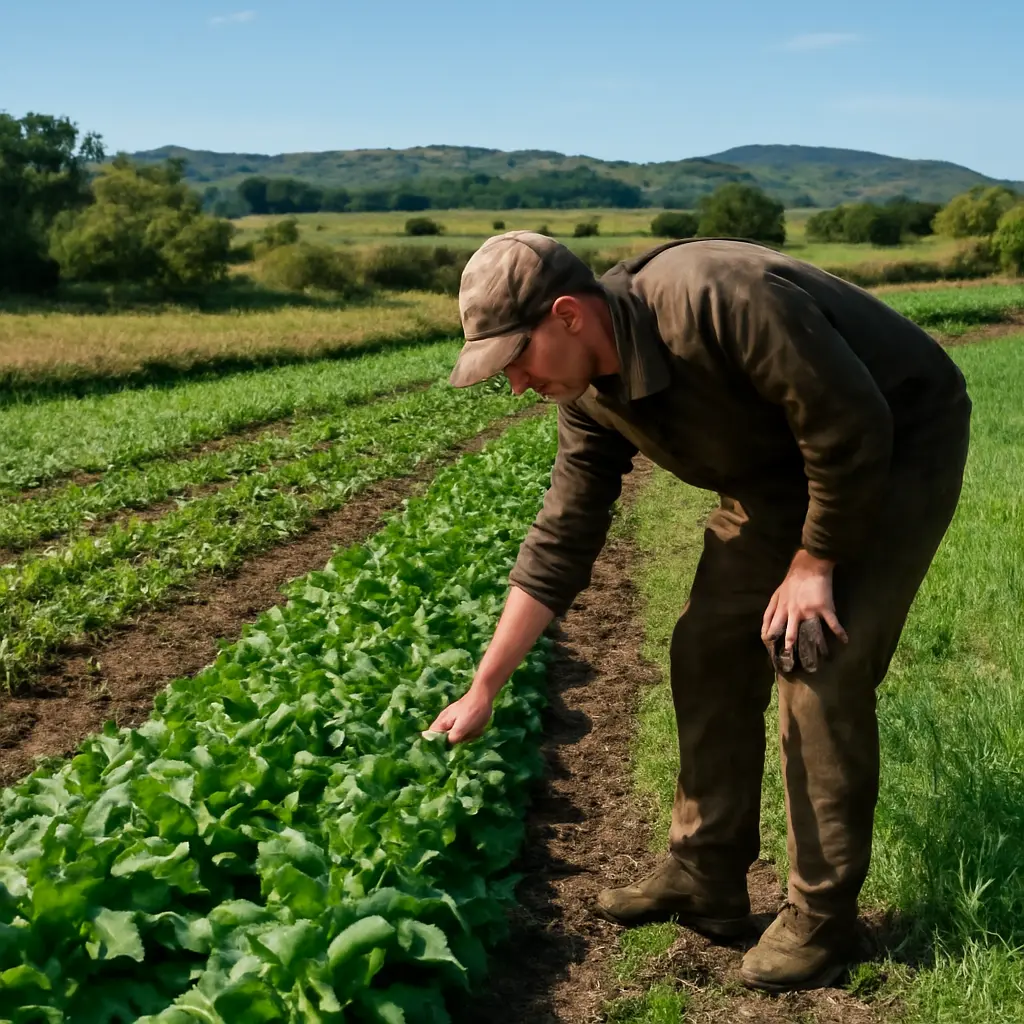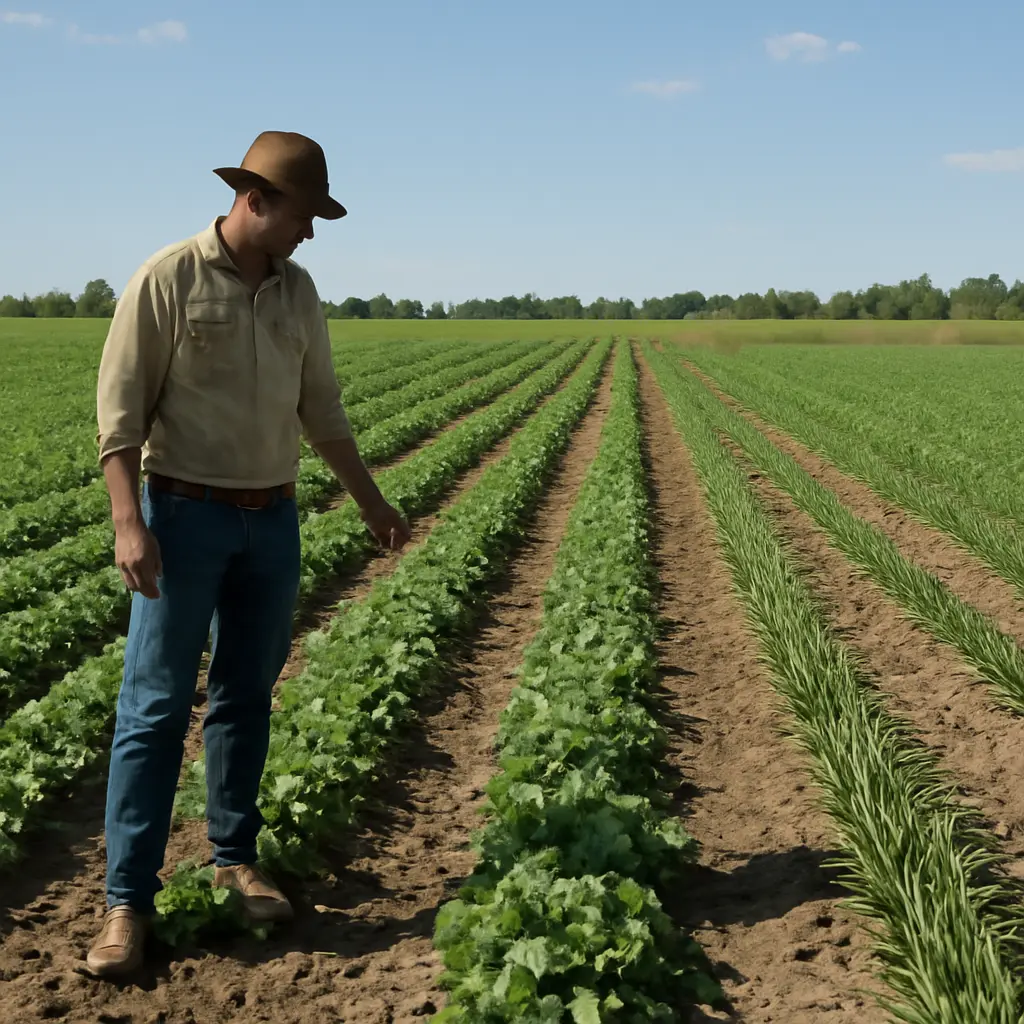
Crop rotation is the planned sequence of different crops grown on the same field over successive seasons or years. For organic farms, it is a central way to interrupt pest and disease cycles, manage weeds, balance nutrient demand, and maintain soil structure without relying on synthetic fertilizers and pesticides. The USDA National Organic Program requires certified organic producers to use crop rotations that maintain or improve soil organic matter and manage pests, weeds, and nutrient deficiencies; rotations are therefore both a practical management tool and part of organic compliance. Effective plans combine botanical families, crop functions, and field-specific timing, while accounting for cover crops, livestock, markets, and local conditions.
Crop Rotation Methods as an Organic Soil-and-Pest Management Strategy
Crop rotation is not simply changing crops each year: it is a deliberate system for changing the biological and agronomic conditions of a field. The National Organic Standards Board’s soil-fertility guidance and USDA organic regulations place rotation within a broader approach to soil health, fertility, and pest prevention. A rotation can include cash crops, cover crops, green manures, and periods of forage or pasture, with each phase chosen for its effects on the next.
The scale of organic agriculture makes these methods relevant to a wide range of farms. USDA’s 2021 Certified Organic Survey reported 17,445 certified organic farms and ranches in the United States. For individual farms, the appropriate rotation depends on soil type, climate, irrigation, crop markets, equipment, and the pest organisms present. The methods below explain how to build a sequence, select crops by family and function, use cover crops, and evaluate a plan over time.
How Crop Rotation Methods Improve Organic Farm Management
The USDA National Organic Program defines the regulatory expectation through 7 CFR § 205.205: producers must implement a crop rotation that maintains or improves soil organic matter, provides for pest management, manages deficient or excess plant nutrients, and supplies erosion control. The rule allows producers to use practices such as sod, cover crops, green manure crops, and catch crops as parts of the rotation. It does not prescribe one universal number of years between crops; the sequence must fit the farm and its documented organic system plan.
In practice, rotation methods include botanical-family rotation, functional-group rotation, nutrient-demand sequencing, cover-crop and green-manure phases, and diversified or forage-based rotations. These approaches can be combined. For example, a farmer may avoid planting a crop family in the same field in consecutive seasons, follow a nitrogen-demanding crop with a legume cover crop, and insert a cereal or forage phase to compete with weeds and protect soil.
Botanical-family rotation
Botanical-family rotation groups crops according to their plant families and avoids repeatedly growing related crops in the same field. Tomatoes, peppers, potatoes, and eggplants are all nightshades; cabbage, broccoli, kale, and radishes are brassicas. Related crops can share host-specific insects and diseases, so changing to a nonhost crop can reduce the opportunity for those organisms to build up.
The interval needed before returning a family depends on the pathogen or pest, its persistence in soil or crop residue, and local conditions. A short break may be inadequate for long-lived organisms such as some clubroot or wilt pathogens. Farmers should use local extension recommendations and field history rather than treating a three- or four-year interval as a guarantee. Family rotation is most effective when paired with clean planting material, sanitation, resistant varieties where available, and monitoring.
Rotation by crop function and nutrient demand
Functional-group rotation arranges crops by what they contribute to or remove from the production system. A common sequence moves from a nutrient-demanding crop, such as corn or a leafy vegetable, to a legume, then to a cereal or grass crop, and finally to another crop with different nutrient and pest demands. Legumes can fix atmospheric nitrogen through symbiosis with soil bacteria, although the amount available to the following crop depends on species, growth, biomass, soil conditions, and how residues are managed.
This approach complements family rotation rather than replacing it. A legume may improve nitrogen supply, but planting the same legume family repeatedly can increase risks from shared pests and diseases. Likewise, a cereal phase may use nitrogen efficiently and provide dense ground cover, but repeated cereal cropping can favor its own weed, disease, or insect problems. Soil tests, crop nutrient budgets, and residue management help determine whether a sequence is actually meeting crop needs.
Cover crops and green-manure phases
A cover crop is grown primarily to protect or improve the soil rather than to harvest as the main cash crop. A green manure is a crop grown and incorporated or otherwise managed to add organic matter and nutrients. USDA organic rules recognize cover crops, green manures, and catch crops as possible elements of crop rotation. Examples include winter rye for ground cover and weed competition, clover or vetch for nitrogen fixation, and mixed grass-legume stands for multiple functions.
Cover crops can reduce bare-soil exposure, capture nutrients that might otherwise be lost, and add roots and residues to the soil. Their benefits depend on establishment, termination timing, water availability, and the following crop. For instance, a vigorous cereal cover may suppress weeds but can tie up nitrogen temporarily as residues decompose; a legume may contribute nitrogen but provide less winter protection than a dense grass stand. The Sustainable Agriculture Research and Education program’s cover-crop guidance emphasizes matching species and management to the intended purpose and regional growing conditions.
How to Design a Crop Rotation for an Organic Farm
Once the rotation’s purposes are clear, the next step is to translate them into a field-by-field schedule. A useful plan accounts for crop families, planting and harvest windows, nutrient needs, residue handling, equipment, and the time needed to interrupt specific pests. Organic certification also makes recordkeeping important: the rotation should be reflected in the farm’s organic system plan and supported by field histories and management records.
Start with field history, soil tests, and farm goals
Field history identifies which crops, weeds, diseases, and soil amendments have occurred in each field. Soil tests provide information about pH and nutrient status, helping farmers avoid both deficiencies and unnecessary nutrient applications. The farm’s goals matter too: a vegetable operation with short, intensive crop cycles may need a different rotation from a grain farm or a mixed crop-livestock farm with several years of forage.
Farmers can begin by mapping fields and recording crop family, planting date, harvest date, cover-crop use, manure or compost applications, and notable pest or disease outbreaks. These records reveal patterns that are difficult to see from memory alone. They also help organic producers demonstrate that rotation is an intentional management practice rather than an undocumented sequence.
Set the rotation length and sequence
Rotation length is the number of seasons or years in the planned sequence before crops return to their starting position. A four-field sequence might allocate fields to a demanding cash crop, a legume or legume-rich cover, a cereal or grass, and a different cash crop family. This is an illustrative framework, not a universal prescription: crop calendars, market demand, disease persistence, and available land can require shorter, longer, or more complex plans.
A practical sequence should avoid placing closely related crops back-to-back, alternate crops with different rooting patterns and nutrient demands, and maintain living or residue cover when feasible. It should also be operationally realistic. A theoretically ideal rotation may fail if the farm lacks equipment for a cover crop, cannot sell the planned crop, or cannot manage the labor peaks associated with its planting and harvest.
Coordinate rotations with weeds, pests, and disease risks
Rotation can disrupt pests by changing host availability, planting dates, crop canopy, and field operations. A crop that is not a host can help reduce populations of certain specialist pests, while a competitive cover crop can make weed establishment more difficult. But rotation is not a stand-alone cure: mobile insects, broad-host-range pathogens, contaminated equipment, and weeds that reproduce before termination can undermine its effects.
The University of California’s integrated pest management resources advise growers to base crop and pest decisions on the biology of the organism and local monitoring. In practical terms, identify the pest before selecting a rotation break, determine its host range and survival period, and check whether nearby fields or volunteer plants can maintain it. Combine rotation with sanitation, resistant varieties, timely cultivation, and scouting as appropriate.
Examples, Evidence, and Limitations of Organic Crop Rotations
The strongest rotation plans are adaptive: they use established principles but change when field observations, weather, or markets change. Research demonstrates that diversified rotations can support multiple soil and crop functions, yet outcomes vary with the crops included, soil, climate, and management. A farm should therefore evaluate its own results rather than assume that a particular sequence will produce the same effect everywhere.
A diversified vegetable-farm example
A vegetable farm might divide fields among nightshades, brassicas, legumes, and cucurbits, with a winter cover crop after an early harvest. In one possible sequence, a brassica cash crop is followed by a non-brassica cover or grain, then a legume, and later a cucurbit. The sequence aims to separate related crops, retain soil cover, and spread labor and nutrient demand across the season. If a persistent disease is identified, the farm may need a longer nonhost interval or a different crop choice.
This example is a planning model, not a recommendation for every region. Planting windows, frost dates, irrigation, soil drainage, and the specific pest complex determine whether each phase is feasible. Local university extension services and organic certification personnel can help assess whether the proposed sequence addresses identified risks and meets the farm’s organic system plan requirements.
Long-term research and interpretation
A long-running comparison at the Rodale Institute’s Farming Systems Trial has examined organic and conventional cropping systems since 1981, including diversified rotations and cover crops. Rodale reports that its organic systems can produce yields comparable to conventional systems under favorable conditions, while performance during drought and other stresses depends on the system and crop. The trial is valuable evidence that rotation belongs within a whole-farm system, but results from one research site should not be treated as a guaranteed outcome for every farm.
The USDA’s 2022 Census of Agriculture reported that 24,082 farms had organic product sales, illustrating the breadth of organic production, though that census measure is not identical to the count of certified operations in the 2021 Certified Organic Survey. These statistics describe the sector’s scale; they do not by themselves establish the effects of any particular rotation. For evaluating a farm plan, useful measures include crop yield and quality, soil-test trends, weed pressure, disease incidence, cover-crop establishment, and purchased nutrient inputs.
Common constraints and ways to respond
Rotation can be constrained by limited acreage, specialized equipment, short-term leases, market contracts, labor bottlenecks, and weather. A small farm may not have enough fields to separate every crop family for an ideal interval. In that case, it can prioritize the most damaging field-specific pest risks, use cover crops and sanitation to support the sequence, and avoid planting susceptible crops in fields with a known problem whenever possible.
Rotation also requires attention to unintended effects. A cover crop may consume water needed by the next crop, a legume may not supply enough nitrogen for a high-demand vegetable, and a poorly terminated cover may become a weed. Regular field scouting, soil testing, and annual review of the plan help identify these trade-offs before they become persistent problems.
Conclusion: Building Resilient Organic Crop Rotations
Organic crop rotation is a planned sequence that connects soil fertility, nutrient cycling, weed control, and pest and disease prevention. Botanical-family rotation helps separate related crops; functional and nutrient-demand sequencing balances crop effects; and cover-crop phases protect and improve soil when appropriately selected and managed. USDA organic regulations require rotation as part of maintaining soil and managing production risks, but the best sequence depends on each farm’s fields and goals.
Begin with field histories and soil tests, identify the main pest and fertility challenges, and build a realistic multi-season schedule. Track outcomes and revise the plan with guidance from local extension specialists, the farm’s certifier, and reliable regional research. Thoughtful rotation is not a fixed formula: it is an ongoing decision process that can strengthen organic farm resilience while supporting productive soil for future crops.
Sources: Electronic Code of Federal Regulations, 7 CFR § 205.205 Crop rotation practice standard, https://www.ecfr.gov/current/title-7/subtitle-B/chapter-I/subchapter-M/part-205/subpart-C/section-205.205; USDA National Agricultural Statistics Service, 2021 Certified Organic Survey, https://www.nass.usda.gov/Publications/AgCensus/2022/Online_Resources/Organics/; USDA National Agricultural Statistics Service, 2022 Census of Agriculture, Organic Agriculture, https://www.nass.usda.gov/Publications/AgCensus/2022/; Sustainable Agriculture Research and Education, Managing Cover Crops Profitably, https://www.sare.org/resources/managing-cover-crops-profitably/; Rodale Institute, Farming Systems Trial, https://rodaleinstitute.org/science/farming-systems-trial/; University of California Statewide Integrated Pest Management Program, Crop rotation and other cultural controls, https://ipm.ucanr.edu/PMG/PESTNOTES/pn7411.html.