
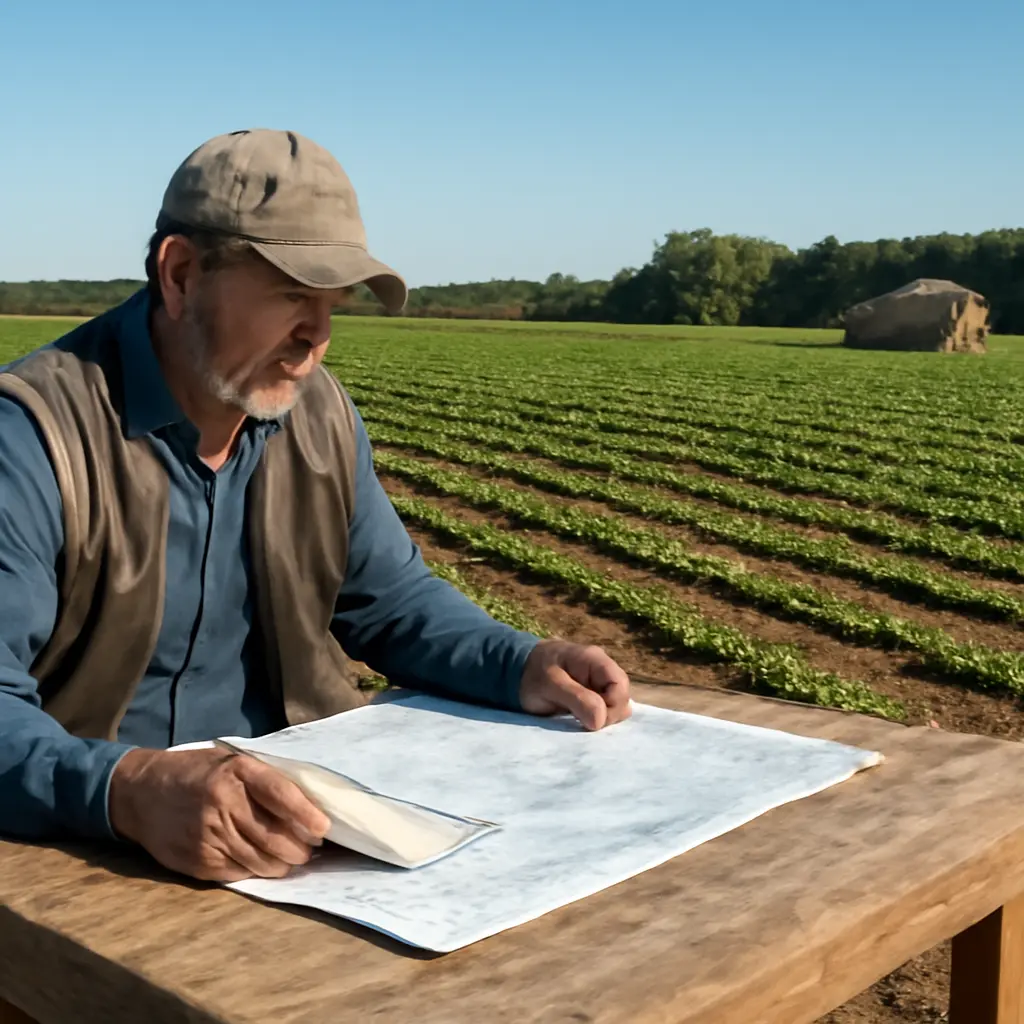
Organic certification is a third-party verification that agricultural products meet legally defined organic production and handling standards. In the United States, farmers and food producers generally comply by following the USDA organic regulations, documenting their practices, and undergoing annual inspection by a USDA-accredited certifying agent. The process covers land eligibility, approved inputs, crop and livestock practices, post-harvest handling, records, and labeling. Its importance is reflected in the scale of the market: USDA reported that U.S. certified organic sales reached $11.2 billion in 2023, while certification provides buyers a documented basis for distinguishing regulated organic products from unsupported claims.
Organic Certification Requirements: Standards, Verification, and Compliance
What organic certification means
The USDA National Organic Program (NOP) defines the framework for producing, handling, and labeling agricultural products sold as organic in the United States. Certification is the process through which a USDA-accredited certifying agent verifies that an operation complies with those rules. It is not simply a label application: the operation must use permitted methods, maintain verifiable records, and accept inspection and oversight.
The core requirements appear in 7 CFR Part 205. They address soil and crop management, livestock care, allowed and prohibited substances, prevention of commingling and contamination, recordkeeping, and product labeling. Organic certification is therefore both a production standard and a traceability system: records must connect inputs and activities on the farm or in the facility to the products ultimately sold.
Who must be certified—and who may qualify for an exemption
Operations that produce or handle products sold, labeled, or represented as organic generally must be certified, subject to limited regulatory exemptions. Under the USDA rules, an operation with no more than $5,000 in annual organic sales may be exempt from certification, but it must still follow applicable organic production and handling requirements and may not use the USDA Organic seal. Certain retailers and operations handling only packaged products may also qualify for exemptions or exclusions under specified conditions.
An exemption is not permission to make an unsubstantiated organic claim. Producers should confirm their status with a certifying agent and review the exact regulatory conditions, especially when processing, repackaging, importing, or selling products under an organic brand.
Farmers Meet Organic Certification Requirements Through Land and Production Controls
Land eligibility and the three-year transition
For crops to qualify as organic, prohibited substances generally must not have been applied to the land for at least three years before harvest of the first organic crop. The transition period gives farmers time to establish compliant practices and demonstrate that fields meet the standard. Producers typically map fields, identify their previous uses and inputs, and retain supporting records such as field histories, input invoices, and crop plans.
The requirement applies to the land, not just to a newly planted crop. A farm may have certified and transitioning fields at the same time, but it must keep their production and harvest records distinct enough to prevent nonorganic product from being represented as organic. Certifiers assess the farm’s field maps, past practices, buffers where appropriate, and management plan.
Soil fertility, seeds, and pest management
Organic crop production relies on practices that maintain or improve soil condition, including crop rotations, cover crops, and the application of plant or animal materials managed to prevent contamination. Farmers must use organic seed when commercially available in the required variety, form, and quality; if it is unavailable, the producer documents the search and may use untreated, non-organic seed under the rule’s conditions. Most genetically engineered seeds and prohibited substances are not allowed in organic production.
Pest, weed, and disease management follows a prevention-first hierarchy. Producers use measures such as sanitation, habitat management, resistant varieties, mechanical or physical controls, and biological controls before considering substances permitted on the National List. A product’s “natural” description alone does not establish that it is allowed; farmers must verify the substance, its use, and any restrictions with their certifier before application.
Livestock feed, health care, and living conditions
Organic livestock requirements connect feed, animal health, and access to the outdoors. Organic livestock must receive 100% organic agricultural feed, subject to limited exceptions such as approved supplements. Producers must provide living conditions that support natural behavior, including outdoor access, and must manage animals to prevent disease through appropriate nutrition, sanitation, and preventive care.
When an animal becomes ill, producers are required to treat it rather than withhold care to preserve organic status. However, animals treated with prohibited substances such as antibiotics cannot be sold as organic under the applicable rules. Records of animal origin, feed, medications, veterinary care, and movement help certifiers verify compliance across the animal’s life and the products derived from it.
Food Producers Meet Organic Certification Requirements Through Handling and Traceability
Processing, ingredients, and the National List
Food processors and handlers must prevent organic products from being mixed with nonorganic products or contaminated by prohibited materials during receiving, storage, processing, packaging, and transport. They maintain procedures for cleaning equipment, separating products, controlling pests, and checking incoming ingredients. Processing aids and other substances used in organic products must meet the applicable USDA requirements.
The National List identifies substances permitted or prohibited in organic production and handling. A product’s organic category depends on its ingredients and processing. In general, products labeled “100 percent organic” must contain only organic ingredients and permitted processing aids; “organic” products must contain at least 95% organic ingredients, excluding water and salt; and “made with organic” products must contain at least 70% organic ingredients and follow additional labeling restrictions. The certifier reviews formulations and labels before use.
Records, traceability, and mass balance
Organic records must be sufficient to demonstrate compliance and trace products through the operation. Farms and facilities commonly maintain field activity logs, seed and input records, harvest quantities, purchase and sales documents, cleaning logs, inventory records, and supplier certificates. Under USDA rules, records must be retained for at least five years and be available for inspection.
Certifiers can compare organic purchases, production, inventory, and sales to identify inconsistencies. This accounting check, often called a mass-balance review, helps establish that an operation did not sell more organic product than it could have produced or purchased. The USDA Strengthening Organic Enforcement rule, effective March 19, 2024, expanded oversight of supply-chain actors and clarified requirements for imports, traceability, and certification in an effort to reduce fraud and improve accountability.
Label review and use of the USDA Organic seal
Organic claims on packaging must match the product’s certified status and ingredient composition. The USDA Organic seal may be used on products certified to the relevant categories, but it cannot be used to imply that an uncertified product is certified. Labels also identify the certifying agent and must meet applicable requirements for ingredient statements and organic claims.
Producers should submit labels and recipes for certifier review before printing or changing them. This step can prevent costly packaging errors, including incorrect percentage claims, improper seal use, or failure to identify the certifier. A certification decision applies to the operation and its approved products, not automatically to every item made at the same facility.
Organic Certification Is Verified Through Planning, Inspection, and Annual Review
The Organic System Plan
The Organic System Plan (OSP) is the operation’s written description of how it will comply with organic standards. The USDA describes it as a plan agreed upon by the producer or handler and the certifying agent. Depending on the operation, it covers land and field histories, crop rotations, inputs, livestock practices, processing steps, sanitation, pest control, recordkeeping, and measures to prevent commingling or contact with prohibited substances.
A useful OSP reflects actual day-to-day practices rather than serving as a form completed once and forgotten. When a farm adds fields, changes inputs, or introduces a new product, it should update its plan and communicate material changes to its certifier. Clear documentation helps staff follow consistent procedures and makes inspection more efficient.
Application, inspection, and certification decision
To apply, an operation selects a USDA-accredited certifying agent, submits its application and OSP, and provides requested records. The certifier reviews the materials and arranges an on-site inspection. Inspectors examine relevant fields, facilities, storage, records, and practices, and may trace products or inputs through the operation. Certification is granted when the certifier determines that the operation complies; identified problems may require corrective action before approval.
Certification is not a one-time event. Certified operations undergo inspection at least annually and must submit updated information for review. Certifiers can conduct additional inspections or request records when needed. Farmers and food producers should budget for application, inspection, and certification costs, which vary by certifier, operation size, complexity, and available assistance.
Noncompliance and corrective action
When an inspector or certifier finds a possible violation, the operation receives written notice and an opportunity to respond or correct the issue under the regulatory process. Serious or unresolved violations can lead to suspension or revocation of certification, loss of the right to market affected products as organic, and potential civil penalties. Producers should document corrective actions, investigate the cause, and adjust procedures so the problem does not recur.
The USDA’s organic integrity system also relies on complaints, investigations, and enforcement. Under the Strengthening Organic Enforcement rule, more businesses in the organic supply chain must be certified unless an exemption applies, and import documentation and traceability controls have been strengthened.
Costs, Assistance, and Practical Examples
Planning for certification expenses
Certification costs can include application and inspection fees, staff time, recordkeeping systems, input substitutions, segregation equipment, and packaging changes. The USDA Farm Service Agency’s Organic Certification Cost Share Program helps eligible operations cover part of their certification expenses. Program rules and reimbursement limits can change, so applicants should confirm current details with USDA and their state agency.
A practical first step is to request estimates from several accredited certifiers and compare their services, timelines, and fee structures. Farmers can also contact USDA’s National Organic Program, Cooperative Extension, and state organic organizations for guidance on transition planning and documentation.
Example: a diversified farm transitioning fields
Consider a diversified vegetable farm that wants to sell organic greens while other fields remain in transition. The farmer maps each field, gathers three years of input history, creates a rotation and soil-building plan, and records seed purchases and pest controls. Harvest crates and storage areas are identified by field and status, while invoices and sales records allow the certifier to trace each lot. The example illustrates why field separation and records are as important as the farming practices themselves.
Example: a processor verifying an ingredient supply chain
A granola producer seeking an organic claim must verify the certification status of relevant suppliers, maintain organic certificates and transaction records, review the formula against ingredient-percentage rules, and prevent contact between organic and nonorganic batches. It documents cleaning and production runs and submits its label for review. These controls turn a supplier’s claim into a traceable, verifiable product record.
Conclusion: Compliance Protects Organic Integrity
Farmers and food producers meet organic certification requirements by following USDA standards for land, crops, livestock, processing, labeling, and records—and by documenting those practices in an Organic System Plan. Accredited certifiers validate compliance through application review, on-site inspection, and annual oversight. The land transition period, approved-input rules, supply-chain traceability, and accurate labels work together to protect the meaning of the organic claim.
For producers considering certification, the next steps are to review USDA requirements, map the operation and its supply chain, contact an accredited certifier early, and build recordkeeping routines before applying. Strong compliance supports consumer confidence, fair competition, and the long-term integrity of organic agriculture.
Sources: USDA Agricultural Marketing Service, National Organic Program, https://www.ams.usda.gov/about-ams/programs-offices/national-organic-program; Electronic Code of Federal Regulations, 7 CFR Part 205—National Organic Program, https://www.ecfr.gov/current/title-7/subtitle-B/chapter-I/subchapter-M/part-205; USDA Agricultural Marketing Service, Organic Standards, https://www.ams.usda.gov/grades-standards/organic-standards; USDA Agricultural Marketing Service, Strengthening Organic Enforcement, https://www.ams.usda.gov/rules-regulations/strengthening-organic-enforcement; USDA National Agricultural Statistics Service, 2023 Organic Survey, https://www.nass.usda.gov/Publications/AgCensus/2022/Online_Highlights/Organics/; USDA Farm Service Agency, Organic Certification Cost Share Program, https://www.fsa.usda.gov/resources/programs/organic-certification-cost-share-program.


