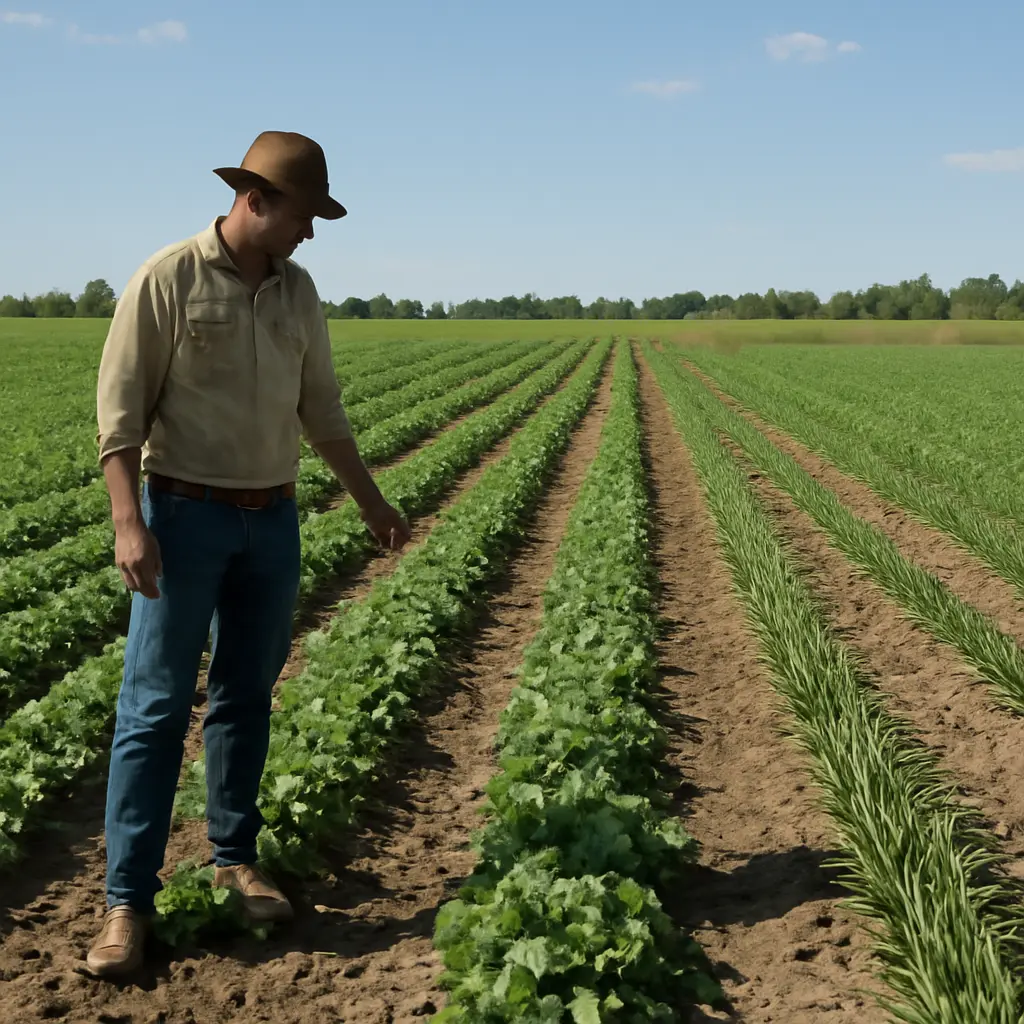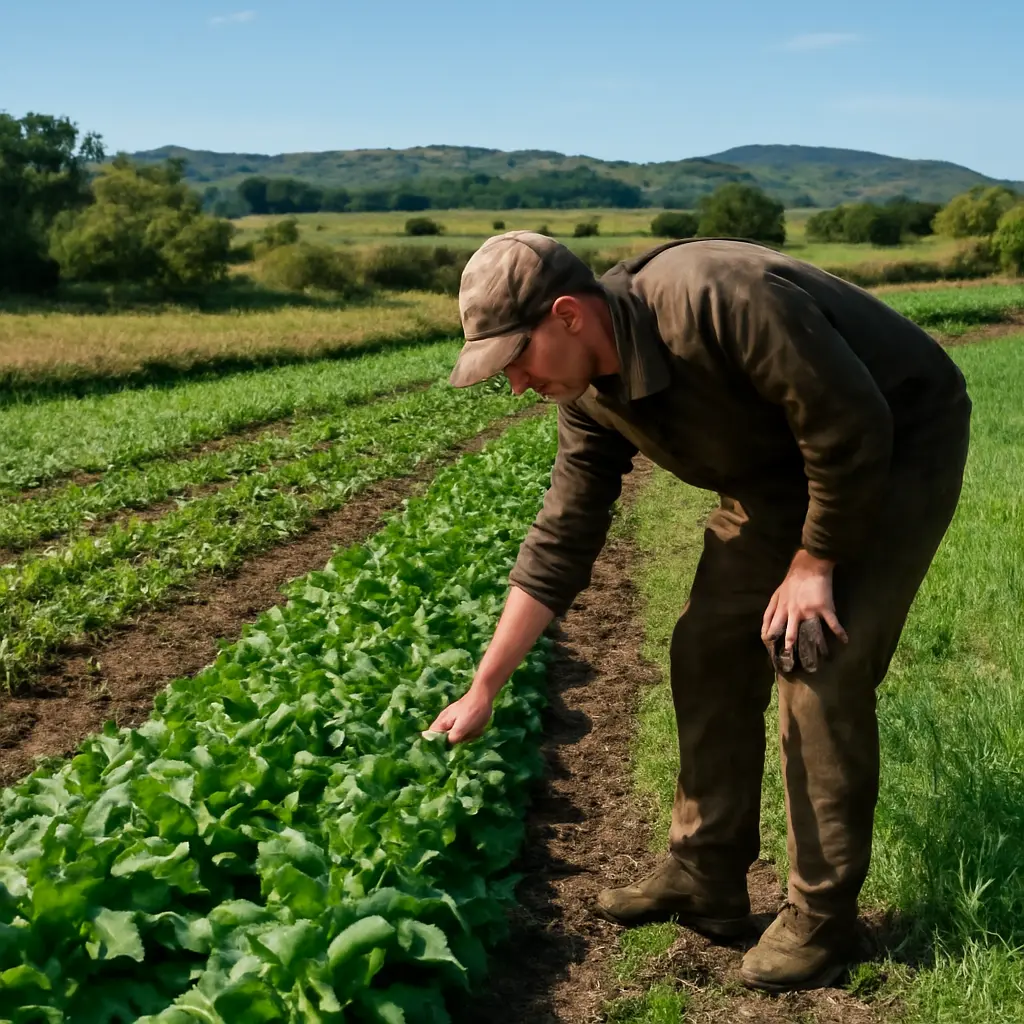
Organic farming is a system of crop and livestock production that relies on ecological processes, biodiversity, and soil health while restricting most synthetic fertilizers and pesticides. Its future will depend on whether farmers, researchers, businesses, and governments can make organic production more resilient and productive while preserving its environmental and consumer benefits. The opportunity is significant: the Research Institute of Organic Agriculture (FiBL) and IFOAM – Organics International report that global organic farmland reached 96.4 million hectares in 2022, and retail sales of organic food and drink totaled about €135 billion. Yet organic producers face persistent challenges, including climate risk, labor and input costs, uneven yields, certification burdens, and competition for consumer trust.
Organic farming’s ecological principles and production trends
The U.S. Department of Agriculture’s National Organic Program defines organic production as a system that integrates cultural, biological, and mechanical practices to foster cycling of resources, promote ecological balance, and conserve biodiversity. In practice, the definition is implemented through standards and certification, not simply through the absence of synthetic chemicals. Organic systems include certified crop production, livestock production, processing, and handling; permitted practices and materials vary by jurisdiction and product.
The area devoted to organic agriculture has expanded, but growth is not uniform across regions or commodities. FiBL and IFOAM report that organic land represented approximately 2 percent of global agricultural land in 2022. Australia held the largest reported area, while Europe and North America accounted for substantial shares of global organic sales. These figures show both the sector’s scale and the room for further transition: organic farming remains a minority of agricultural land use even where consumer markets are well established.
Soil health, rotations, and biodiversity
Organic soil management combines practices such as crop rotation, cover cropping, compost and manure use, reduced soil disturbance, and diversified planting. The aim is to sustain soil structure and fertility through biological activity and nutrient cycling. Rotations can also interrupt pest and disease cycles, while field margins, hedgerows, and mixed cropping can provide habitat for beneficial organisms. These practices are not exclusive to certified organic farms, but organic rules make ecological management central to production.
The National Organic Program requires organic producers to manage soil fertility and crop nutrients primarily through practices that maintain or improve soil organic matter. Results depend on climate, crop, soil type, and management, so organic status alone does not guarantee a particular soil outcome. Long-term field studies and farm-level monitoring are important for distinguishing effects of specific practices from effects of certification.
Biological pest control and permitted inputs
Organic pest management uses prevention first: crop rotation, resistant varieties, sanitation, habitat management, and physical or biological controls. If these measures are insufficient, producers may use substances allowed under the applicable organic standard. In the United States, the National Organic Standards Board advises on materials, and the National List identifies substances that may or may not be used in organic production and handling.
This distinction matters because “organic” does not mean “pesticide-free.” Some natural and synthetic substances are permitted under defined conditions, while many synthetic substances are prohibited. Effective programs therefore combine careful records, scouting, prevention, and judicious intervention. Integrated pest management can also reduce the risk of resistance and help farmers respond to new pests associated with changing climates and trade.
Organic farming’s climate resilience and environmental performance
Climate resilience describes the ability of a farming system to withstand, adapt to, and recover from hazards such as drought, heat, flooding, and shifting pest pressure. Organic systems may support resilience through soil cover, diversified rotations, and biological activity, but outcomes vary. Organic farming is not automatically climate-proof: a farm’s performance depends on its location, management choices, crop mix, infrastructure, and access to water and markets.
Soil carbon, water, and emissions
Soil organic matter can improve aggregation and water-holding capacity, potentially helping crops cope with dry periods and reducing runoff during heavy rain. The Food and Agriculture Organization of the United Nations (FAO) identifies soil organic carbon as important to soil health and agricultural resilience. However, carbon outcomes depend on the full production system: tillage, manure sourcing, nitrogen management, yields, and land-use change can all affect greenhouse-gas balances.
A 2017 meta-analysis in Nature Communications by Lauren Ponisio and colleagues found that organic yields averaged 19.2 percent lower than conventional yields across the studies reviewed, but diversified practices—particularly crop rotations and multi-cropping—substantially narrowed the yield gap. This finding highlights a central climate and land-use trade-off: lower yields per hectare can require more land to produce the same output if demand is unchanged, while rotations and ecological management can improve both productivity and resilience in suitable contexts.
Biodiversity and ecosystem services
Organic farms can contribute to biodiversity by reducing reliance on many synthetic pesticides and by encouraging habitat diversity, although results vary with landscape and farm design. A 2014 meta-analysis by John P. Tuck and colleagues in the Journal of Applied Ecology found that organic farming increased species richness by an average of about 30 percent compared with conventional farming across the studies examined. The authors also noted variation by organism group and landscape context.
Biodiversity benefits are strongest when farms pair production practices with habitat measures, such as flowering field margins and connected natural areas. These features can support pollinators and natural pest enemies, but they require land, planning, and sometimes payments for ecosystem services. Organic certification can provide a baseline for production rules; it does not substitute for local conservation planning.
Organic farming’s productivity, economics, and market access
The economic future of organic farming depends on balancing production costs, yields, price premiums, certification expenses, and market access. Organic products can earn higher prices, but premiums are not guaranteed and can fluctuate with supply, consumer purchasing power, and retailer strategy. Farmers also face transition costs because land must meet organic requirements before products can be sold as certified organic.
Yield gaps and farm profitability
Yield gaps differ substantially by crop, region, and management. The 2017 Ponisio meta-analysis reported the overall average gap noted above, while finding that diversified cropping systems reduced it. A 2015 meta-analysis by Verena Seufert and Navin Ramankutty in Nature likewise concluded that organic yields vary by crop and context, with the largest gaps often occurring in crops where nutrient supply or pest control is difficult to replace with available organic methods.
Profitability is not determined by yield alone. Lower spending on some purchased inputs may offset part of a yield difference, and price premiums can improve returns when reliable buyers are available. Conversely, labor-intensive weed control, certification fees, limited processing capacity, and uncertain markets can erode margins. Comparing systems therefore requires whole-farm accounting that includes labor, input costs, rotation benefits, risk, and price volatility rather than a single yield measure.
Certification, supply chains, and consumer trust
Organic certification verifies that production and handling meet a defined legal standard. In the United States, the USDA Organic seal applies to products certified under the National Organic Program, with different labeling categories according to product composition. Certification involves records, inspections, and approved practices; these requirements help protect the meaning of the label but can be demanding, especially for small farms and new entrants.
Supply chains also shape access. Farmers may need nearby processors, storage, transport, and buyers willing to handle segregated organic goods. The European Commission’s organic action plan and national programs have emphasized market development, research, and public procurement as ways to support growth. Strong traceability and transparent communication are essential because misleading environmental claims can weaken trust in both organic labels and sustainability initiatives generally.
Organic farming’s technology, research, and policy opportunities
Future progress will depend on combining ecological knowledge with useful technology and policies that reward public benefits. Digital tools can help organic producers monitor fields and target interventions, while breeding and agronomy can improve crop performance under organic constraints. Innovation must remain compatible with certification rules and accessible to farms of different sizes.
Precision agriculture and decision support
Satellite imagery, sensors, farm-management software, and machine vision can help identify weeds, nutrient deficiencies, water stress, and emerging pest outbreaks. For organic farms, these tools may support timely mechanical weeding, targeted biological controls, and more efficient irrigation. Their value depends on data quality, affordability, connectivity, and training; technology that is expensive or designed only for large farms may widen existing inequalities.
Automation is especially relevant where organic production depends on labor-intensive tasks such as weeding and harvesting. Robotic weeders and camera-guided equipment are being tested and adopted in some production systems, but equipment costs and performance across varied soils and crops remain constraints. Public research partnerships and cooperative equipment-sharing models can help smaller producers access these tools.
Breeding, biological inputs, and farmer-led research
Organic breeding seeks varieties suited to low external nutrient inputs, diverse rotations, local pests, and mechanical weed control. Conventional breeding methods can be used in organic systems, subject to the relevant standards and regulations. Better access to regionally adapted seed, participatory trials, and public breeding programs can address needs that may be overlooked when research focuses mainly on high-input environments.
Biological inputs—including microbial inoculants, biopesticides, and compost-based amendments—may help manage nutrients and pests, but they require careful validation. Product performance can vary with soil, temperature, and application method. Independent trials and clear regulatory review are needed so that farmers can distinguish reliable tools from unsubstantiated claims.
Transition finance and public policy
Transition finance can help cover the period when a farm changes practices but has not yet earned certified-organic prices. Useful measures include technical assistance, crop insurance suited to diversified rotations, grants for equipment and storage, and procurement programs that create dependable demand. Policy design should account for regional differences rather than assume a single pathway works for all farms.
The European Union’s Farm to Fork strategy set a goal for at least 25 percent of EU agricultural land to be under organic farming by 2030. This is a policy target, not a forecast or a guarantee of achievement. Reaching it would require coordinated support for production, processing, consumer demand, research, and monitoring of environmental outcomes.
Organic farming’s challenges and practical responses
Organic farming’s expansion is constrained by interlinked challenges rather than one decisive obstacle. Climate extremes can disrupt yields; weeds and pests can become difficult to control; organic fertilizers may be costly or poorly matched to crop needs; and certification may impose disproportionate burdens on smaller producers. At the same time, growing demand can create opportunities for farmers who can meet quality, volume, and traceability requirements.
Climate shocks, weeds, and nutrient management
Drought, heat, and intense rainfall can undermine crop rotations and increase erosion or disease pressure. Organic producers can reduce some risks through diversified rotations, cover crops, water conservation, and locally adapted varieties, but these measures require planning and may involve short-term costs. Weed control remains a major operational challenge because mechanical methods can be weather-dependent and labor-intensive, while repeated cultivation may affect soil structure.
Nutrient management presents a related constraint: nutrients released from manure, compost, and cover crops may not align precisely with crop demand. Testing, nutrient budgeting, legume rotations, and improved compost handling can reduce losses and shortages. Extension services and research institutions can help farmers tailor these practices to local soils and avoid both under-fertilization and nutrient pollution.
Affordability, equity, and access
Organic food is often more expensive at retail, which can limit access for households with constrained budgets. The premium reflects a combination of production, certification, processing, and market factors; it does not necessarily translate into higher profits for every farmer. Improving affordability requires attention to distribution costs, public food purchasing, regional processing, and support for producers in underserved areas.
Equity also concerns who can enter and remain in the sector. Smaller farms may struggle with paperwork, certification costs, land access, and limited bargaining power. Group certification where permitted, accessible technical assistance, cooperative marketing, and culturally responsive extension can lower barriers while maintaining credible standards.
Conclusion: organic farming’s next phase
Organic farming is a defined, regulated production system whose future rests on ecological management, credible certification, viable markets, and continued research. Global organic farmland and sales have grown substantially, while evidence points to potential biodiversity and soil-management benefits alongside real yield and cost trade-offs. Diversified rotations, precision tools, better-adapted varieties, transition support, and stronger supply chains offer practical ways to address those trade-offs.
The broader implication is that organic agriculture should be evaluated by outcomes as well as labels: soil condition, biodiversity, emissions, resilience, farm livelihoods, and access to nutritious food. Farmers can consult local extension services and certification agencies, buyers can build transparent long-term relationships with producers, and policymakers can support independent research and transition finance. Readers seeking to act can compare local certification standards, learn how food is produced in their region, and support programs that make sustainable farming both credible and economically accessible.
Sources: USDA Agricultural Marketing Service, National Organic Program: Organic Standards, https://www.ams.usda.gov/rules-regulations/organic/standards; FiBL and IFOAM – Organics International, The World of Organic Agriculture 2024, https://www.fibl.org/en/shop-en/1747-organic-world-2024; FAO, Soil Organic Carbon: The Hidden Potential, https://www.fao.org/3/i6937e/i6937e.pdf; Ponisio, Lauren C., et al., “Diversification practices reduce organic to conventional yield gap,” Nature Communications, 2015, https://doi.org/10.1038/ncomms7581; Seufert, Verena, and Navin Ramankutty, “Many shades of gray—The context-dependent performance of organic agriculture,” Nature, 2017, https://doi.org/10.1038/nplants.2017.95; Tuck, John P., et al., “Land-use intensity and the effects of organic farming on biodiversity: a hierarchical meta-analysis,” Journal of Applied Ecology, 2014, https://doi.org/10.1111/1365-2664.12219; European Commission, Farm to Fork Strategy, https://food.ec.europa.eu/horizontal-topics/farm-fork-strategy_en.